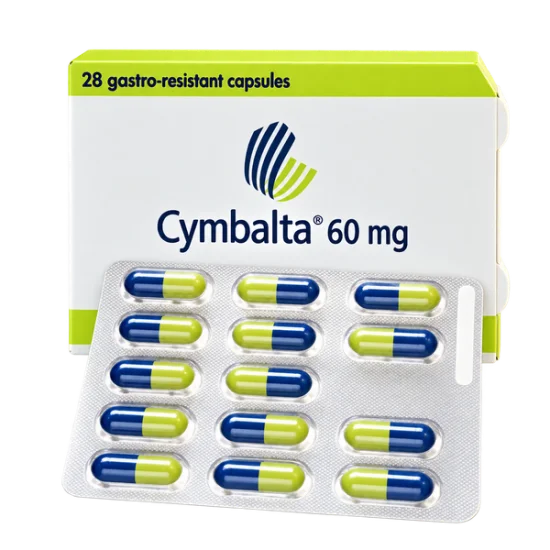
Cymbalta
3.8 (5 customer reviews)It is used for adults with depression, generalised anxiety, and several chronic pain conditions. By increasing serotonin and norepinephrine signalling, Cymbalta can support mood regulation while reducing pain sensitivity.
Product information
Duloxetine, the active ingredient of Cymbalta, is a serotonin-norepinephrine reuptake inhibitor (SNRI) supplied as gastro-resistant capsules.
Ingredients
Cymbalta contains duloxetine as its active ingredient. Duloxetine belongs to the serotonin-norepinephrine reuptake inhibitor (SNRI) class and is supplied as gastro-resistant capsules.
Therapeutic indications
Cymbalta may be prescribed for several conditions where altered serotonin and norepinephrine signalling contributes to symptoms. The same active ingredient can therefore be used for emotional symptoms, nerve pain, or long-lasting musculoskeletal pain.
Common therapeutic uses include:
- Major depressive disorder, where low mood, reduced interest, sleep disturbance, and poor concentration persist.
- Generalised anxiety disorder, marked by difficult-to-control worry and physical tension.
- Diabetic peripheral neuropathic pain, often described as burning, tingling, electric-shock sensations, or painful sensitivity in the feet and legs.
- Fibromyalgia, where widespread pain, fatigue, poor sleep, and cognitive fog may occur together.
- Chronic musculoskeletal pain, including chronic lower-back pain and pain linked with osteoarthritis in suitable patients.
For people with both low mood and chronic pain, duloxetine can be a practical option because one treatment may address both symptom patterns. It is not a fast-acting painkiller, and it will not suit every type of pain. Mechanical injury, inflammatory arthritis, and sudden severe pain still need their own assessment and treatment approach.
The WHO recognises depression and anxiety as conditions requiring structured assessment, follow-up, and treatment matched to symptom severity and functioning [2].
Dosage and administration
Cymbalta is taken orally as gastro-resistant capsules. The amount taken at each intake is set individually for each person rather than being one fixed amount.
A prescriber may begin at a lower daily amount for some indications, then adjust treatment according to benefit and tolerability. Others may start directly at the intended maintenance amount. Do not alter the capsule amount independently, even if symptoms improve or side effects are uncomfortable.
Practical administration points:
- Take the capsule at roughly the same time each day.
- Swallow it whole with water.
- A morning schedule may suit people who feel more alert after taking duloxetine.
- An evening schedule may suit people who experience daytime sleepiness.
- If nausea occurs, taking the capsule after a light meal can feel easier.
- If a dose is missed, take it when remembered unless the next scheduled dose is close. Do not take two doses together.
A common mistake is opening a capsule because swallowing feels difficult. The small pellets inside are designed to remain intact until they pass beyond the stomach. Another frequent problem is changing from morning to evening repeatedly during the first week, which makes it harder to judge whether sleep changes come from duloxetine or from an inconsistent schedule.
When not to use it
Cymbalta is not for you if you use a monoamine oxidase inhibitor, have taken one within the required washout period, or have uncontrolled narrow-angle glaucoma. Combining duloxetine with an MAOI can cause a dangerous rise in serotonin activity.
Extra caution is needed with liver disease, substantial alcohol use, kidney impairment, bipolar disorder, seizure disorders, bleeding disorders, uncontrolled hypertension, or a history of severe drug-induced skin reactions. Duloxetine can raise blood pressure and may affect heart rate, so monitoring is relevant when there is cardiovascular disease.
When this is not for you
Do not take Cymbalta with an MAOI or if you have uncontrolled narrow-angle glaucoma. Speak with a clinician before using it if you have liver or kidney problems, drink substantial amounts of alcohol, have bipolar disorder or seizures, have bleeding problems or uncontrolled high blood pressure, or take medicines that affect bleeding or blood glucose. Younger people need close observation for worsening suicidal thoughts or behaviour when treatment starts or changes.
Possible side effects
Side effects are most likely when Cymbalta is started or when the dose is changed. Nausea is among the most frequent early effects. Dry mouth, constipation, reduced appetite, sweating, dizziness, tiredness, insomnia, headache, tremor, and blurred vision can also occur.
Some people notice a change in sexual desire, erection quality, orgasm, or ejaculation. These effects can persist for as long as treatment continues and deserve a direct conversation during follow-up rather than silent acceptance.
Common experiences can be grouped as follows:
- Digestive effects: nausea, constipation, dry mouth, reduced appetite, abdominal discomfort.
- Nervous-system effects: dizziness, sleepiness, insomnia, headache, tremor, tingling sensations.
- Autonomic effects: increased sweating, flushing, palpitations, raised blood pressure in some people.
- Sexual effects: reduced libido, delayed orgasm, erectile or ejaculation difficulties.
Nausea often settles after the first weeks, though it does not always do so. Dizziness may be more apparent when standing quickly, especially during the first days. Alcohol can intensify sleepiness, impair judgement, and add strain to the liver.
Seek urgent medical help for severe agitation, confusion, fever, muscle rigidity, fainting, seizures, unusual bleeding, yellowing of the eyes or skin, or thoughts of self-harm. Duloxetine can also trigger a manic episode in a person with bipolar disorder, with signs such as unusually elevated mood, little need for sleep, racing thoughts, or risky behaviour.
The FDA duloxetine prescribing information reports nausea, dry mouth, somnolence, fatigue, constipation, dizziness, and hyperhidrosis among commonly reported adverse reactions [3].

How it affects the body
Cymbalta contains duloxetine, an SNRI antidepressant. SNRIs reduce the reabsorption of serotonin and norepinephrine by nerve cells, leaving more of both neurotransmitters available between neurons. Serotonin contributes to mood, sleep, appetite, and emotional processing. Norepinephrine influences alertness, motivation, and the way the spinal cord filters pain signals. Together, these signalling effects help explain duloxetine's therapeutic actions.
This dual action explains why duloxetine has a role in both mental-health conditions and persistent pain syndromes. It does not create an immediate mood lift. The nervous system needs time to adapt to altered neurotransmitter signalling.
The gastro-resistant capsule matters. Duloxetine is protected from stomach acid so that absorption occurs further along the digestive tract.
EMA product information describes duloxetine as an SNRI with established uses in depression, anxiety, and selected pain conditions [1].
Common mistakes
The most avoidable problems with Cymbalta are usually practical.
- Stopping once mood improves, then developing withdrawal symptoms or relapse.
- Taking capsules inconsistently because the medicine does not feel immediately active.
- Opening or chewing gastro-resistant capsules.
- Doubling up after a missed dose.
- Adding tramadol, St John’s wort, or another antidepressant without reviewing the interaction.
- Assuming every unpleasant sensation is temporary, even when there is severe agitation, jaundice, unusual bleeding, or suicidal thinking.
- Failing to mention a past manic episode or bipolar diagnosis before treatment starts.
Cymbalta needs a consistent daily routine.
Comparison
Duloxetine is chosen most often when depression or anxiety occurs alongside neuropathic or chronic musculoskeletal pain. Venlafaxine, also known by the brand name Effexor, is another SNRI and has a similar dual neurotransmitter approach. Sertraline, known as Zoloft, and escitalopram, known as Lexapro, are SSRIs that mainly affect serotonin.
| Active ingredient | Drug class and mechanism | Typical clinical focus |
|---|---|---|
| Duloxetine | SNRI; increases serotonin and norepinephrine signalling | Depression, anxiety, diabetic nerve pain, fibromyalgia, chronic pain |
| Venlafaxine | SNRI; serotonin effect is stronger at lower exposure, with norepinephrine activity increasing as exposure rises | Depression, anxiety, panic symptoms |
| Sertraline or escitalopram | SSRI; primarily increases serotonin signalling | Depression, anxiety, panic symptoms, obsessive-compulsive symptoms |
SSRIs are often preferred when anxiety or depression is the main issue and pain is not prominent. Duloxetine can be more relevant where nerve pain, fibromyalgia, or chronic back pain coexist with mood symptoms. The trade-off is that duloxetine may cause more nausea, sweating, dry mouth, or discontinuation symptoms for some people.
No antidepressant is universally better. Prior response, sleep pattern, pain symptoms, blood pressure, sexual side effects, coexisting illness, and interaction risk all shape the choice.
What doctors say
In clinical practice, prescribers often explain that Cymbalta works best when expectations are realistic. The first target may be improved sleep continuity, less pain reactivity, or fewer days dominated by anxiety rather than a sudden disappearance of symptoms.
A useful review looks beyond mood alone. Doctors often ask whether the person is getting out of bed more easily, returning to routine tasks, walking further despite pain, or feeling less overwhelmed by normal demands. These functional changes can appear before a person describes a major change in mood.
Duloxetine is also not a passive treatment. Alcohol use, missed doses, abrupt stopping, and unreported medicines can all change tolerability and outcomes.
Comparison
Common questions
Can Cymbalta capsules be split, crushed, or chewed?
No. Cymbalta gastro-resistant capsules should be swallowed whole because the pellets are designed to pass through the stomach before releasing duloxetine. Crushing, chewing, or opening them can damage that protection and may change absorption. EMA product information published in 2024 describes Cymbalta as gastro-resistant capsules intended for oral use without breaking the capsule contents.
Cymbalta during pregnancy and breastfeeding
Duloxetine use during pregnancy requires an individual assessment of maternal benefit and possible fetal or newborn risks. Late-pregnancy exposure to SNRIs may be associated with newborn adaptation symptoms such as breathing difficulty, feeding problems, tremor, or irritability. Duloxetine passes into breast milk in small amounts, so breastfeeding decisions require consideration of the infant’s health and the parent’s need for treatment. The EMA discusses pregnancy and lactation precautions in its duloxetine product information, updated in 2024.
Driving, concentration, and machinery use
Cymbalta can cause dizziness, sleepiness, blurred vision, or reduced concentration, most often early in treatment or after a dose change. Avoid driving, operating machinery, or undertaking safety-sensitive work until you know how duloxetine affects you personally. Alcohol can worsen these effects. The WHO’s 2023 guidance on mental-health treatment stresses that medicine effects on daily functioning should be reviewed during follow-up.
Cymbalta with food or on an empty stomach
Cymbalta can be taken with or without food. Food does not remove the need to swallow the capsule whole. Taking it after food may reduce nausea for some people, while others prefer an empty-stomach routine if they tolerate it comfortably. EMA guidance from 2024 allows administration with or without food, provided the daily schedule remains consistent.
Cymbalta with tramadol and other opioid pain medicines
Tramadol deserves special caution because it affects serotonin as well as pain pathways. Combining tramadol and duloxetine can raise the risk of serotonin syndrome and seizures, especially when other serotonergic medicines are also present. Symptoms such as fever, confusion, heavy sweating, tremor, diarrhoea, or muscle stiffness require urgent assessment. The FDA’s 2023 duloxetine prescribing information lists tramadol among medicines that can increase serotonergic risk.
Next steps when expected improvement does not occur
Duloxetine may need several weeks before a meaningful change in mood, anxiety, or pain becomes clear. If symptoms remain unchanged, worsen, or interfere with daily functioning, the treatment plan may need adjustment rather than abrupt stopping. Clinicians may review adherence, timing, diagnosis, coexisting pain conditions, sleep, alcohol intake, and interacting medicines before deciding on a dose change or alternative treatment. NICE guidance from 2022 supports reassessment of treatment response and tolerability when depression does not improve as expected.
Do you offer anonymous delivery?
Your order will be securely packed and shipped within 24 hours. This is exactly what your package will look like (images of an actual item sent). It has the size and look of a regular private letter (24x11x0.7 cm) and its contents cannot be seen.
Sources
- European Medicines Agency (2024). Cymbalta: EPAR product information.
- World Health Organization (2023). Mental Health Gap Action Programme intervention guide, version 2.0.
- U.S. Food and Drug Administration (2023). Cymbalta (duloxetine delayed-release capsules) prescribing information.