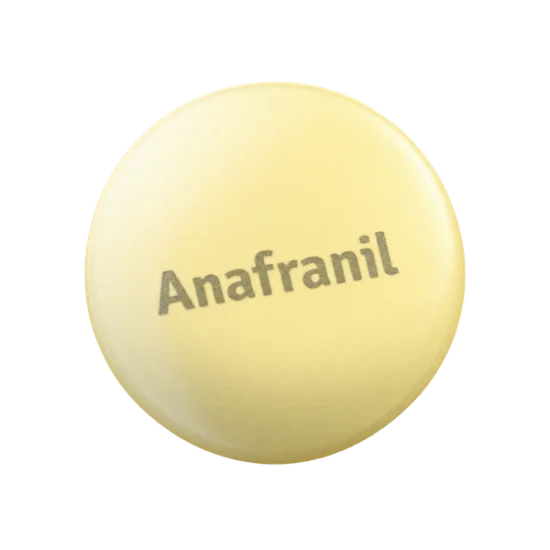
Anafranil
3.8 (3 customer reviews)Adults diagnosed with obsessive-compulsive disorder may be prescribed Anafranil when a tricyclic antidepressant is clinically appropriate. Anafranil contains clomipramine hydrochloride, which increases serotonin signalling and can reduce persistent obsessions and compulsive behaviour.
Product information
Anafranil is the brand name for clomipramine hydrochloride, a tricyclic antidepressant supplied as oral tablets. Clomipramine belongs to the tricyclic antidepressants. It primarily inhibits serotonin reuptake, leaving more serotonin available between nerve cells.
Ingredients
Anafranil is the brand name for clomipramine hydrochloride, a tricyclic antidepressant supplied as oral tablets.
Therapeutic indications
Anafranil is the brand name for clomipramine hydrochloride, a tricyclic antidepressant supplied as oral tablets. Its principal established role is the treatment of obsessive-compulsive disorder (OCD), a condition involving intrusive thoughts, unwanted images, or urges followed by repetitive actions or mental rituals. The medicine may also be selected by a specialist for major depressive disorder, depression with prominent anxiety, or panic disorder when the expected benefits justify its tolerability risks.
The United States Food and Drug Administration recognises clomipramine for obsessions and compulsions associated with OCD [1]. The diagnosis, treatment goal, and dose schedule depend on symptoms, age, medical history, other medicines, and response.
Primary Indication in Obsessive-Compulsive Disorder
Anafranil can reduce the intensity and frequency of obsessions and compulsions. Improvement is usually gradual rather than immediate. Psychological therapy, including exposure and response prevention, may be used alongside clomipramine because medication and structured therapy address different parts of OCD.
A useful practical distinction is that early side effects can appear before the full benefit. That pattern does not automatically mean treatment has failed. Persistent symptoms, worsening anxiety, or intolerable adverse effects require a treatment review rather than an unsupervised dose change.
Specialist-Led Uses in Depression and Panic Disorder
Clomipramine affects mood and anxiety pathways, so a specialist may consider it for selected cases of major depressive disorder, depression, or panic disorder. It is not the first choice for every person with these conditions. Selective serotonin reuptake inhibitors and psychological treatments are often considered before a tricyclic antidepressant because clomipramine has more anticholinergic, cardiovascular, and overdose-related risks.
Assessment for bipolar disorder matters before starting an antidepressant. A history of unusually high energy, reduced need for sleep, impulsive behaviour, or previous mania changes the treatment decision. New or worsening suicidal thoughts require urgent medical assessment, especially after starting treatment or changing the dose.
Dosage and administration
- Swallow the tablet with water at the prescribed time.
- Do not take extra tablets because symptoms remain unchanged.
- Do not double the next dose after a missed dose.
- If a missed dose is remembered close to the next scheduled dose, the usual approach is to skip the missed dose rather than take two together.
- Do not stop clomipramine suddenly unless urgent medical advice directs this.
- Sustained-release tablets must not be crushed, chewed, or altered unless the product-specific instructions expressly allow it.
The exact schedule is agreed with a doctor or pharmacist according to the purpose of use. A tablet strength is not a complete personal treatment plan; the same strength can be appropriate at one stage and unsuitable at another.
Immediate-Release and Sustained-Release Formulations
Immediate-release Anafranil tablets release clomipramine more readily after swallowing. Sustained-release formulations release medicine over a longer period and may be prescribed less frequently. These formulations should not be substituted or altered casually.
One practical mistake is assuming that every tablet can be split because it has a score line. A score line does not automatically mean that a sustained-release tablet can be divided. Altering the release system can change exposure and increase adverse effects.
Dose Titration and Missed-Dose Handling
Clinicians may increase or reduce clomipramine gradually. They assess symptom improvement, sleepiness, constipation, dizziness, blood pressure, heart rhythm, and other medicines taken at the same time. Abrupt discontinuation can cause nausea, headache, sleep disturbance, irritability, sweating, dizziness, or a return of the treated symptoms.
Do not double a missed dose.
When not to use it
This medication is not for you if you are taking, or have recently taken, a monoamine oxidase inhibitor (MAOI) unless a prescriber has planned the transition. The combination can cause severe serotonin toxicity, dangerous blood-pressure changes, agitation, fever, seizures, or cardiovascular collapse.
Examples of MAOIs include phenelzine, marketed in some settings as Nardil, and isocarboxazid, marketed as Marplan. The required interval between treatments varies by medicine, half-life, dose, and patient factors. A recent MAOI must be disclosed before clomipramine is started.
Clomipramine also requires careful review in people with:
- A seizure disorder or previous unexplained seizure
- Heart disease, conduction problems, fainting, or an abnormal ECG
- Narrow-angle glaucoma
- Urinary retention or prostate-related difficulty urinating
- Significant liver disease
- Bipolar disorder or previous mania
- Severe constipation
- Older age with falls, confusion, or a high anticholinergic burden
- Pregnancy or breastfeeding
SSRIs, fluoxetine, paroxetine, fluvoxamine, sertraline, and buspirone should be disclosed before Anafranil is prescribed. Some combinations raise serotonin-toxicity risk, while others can increase clomipramine exposure or alter its metabolism.
When this is not for you
Avoid Anafranil unless a prescriber has specifically reviewed it if you have seizure problems, heart disease, fainting, glaucoma, trouble urinating, severe constipation, liver disease, bipolar disorder, or a history of mania. Tell your prescriber if you are pregnant or breastfeeding, older and prone to falls or confusion, or taking an MAOI or other antidepressant. Get urgent help for suicidal thoughts, severe mood elevation, unusual impulsivity, fainting, seizures, or an irregular heartbeat.
Possible side effects
Anafranil can cause anticholinergic, gastrointestinal, neurological, cardiovascular, and sexual side effects. The FDA prescribing information describes dry mouth, constipation, nausea, indigestion, dizziness, sleepiness, sweating, changes in appetite, and sexual dysfunction among reported reactions [3]. Not everyone experiences them, and some mild effects become less troublesome as the body adjusts.
Common Tolerability Effects
Common effects may include:
- Dry mouth
- Constipation
- Nausea or indigestion
- Dizziness, especially when standing
- Sleepiness or reduced alertness
- Sweating
- Blurred vision
- Tremor
- Reduced sexual interest, delayed orgasm, erectile difficulty, or impotence
Water can relieve mouth dryness, while excessive alcohol and caffeine may worsen dizziness or sleep disruption. Constipation deserves attention early because severe constipation can become painful and, rarely, medically serious. A high-fibre diet may help some people, but bowel symptoms that persist need clinical review.
Sexual dysfunction can be overlooked because patients may feel uncomfortable raising it. It is a recognised antidepressant effect and can often be discussed as part of treatment planning rather than accepted silently.
Serious Reactions Requiring Prompt Assessment
Seek urgent medical care for a seizure, fainting, severe confusion, high fever, irregular heartbeat, severe allergic swelling, or suicidal thoughts. Serotonin toxicity can cause agitation, sweating, tremor, diarrhoea, fever, muscle rigidity, and confusion, especially after combinations with other serotonergic medicines.
Seizure risk rises with overdose, rapid dose escalation, heavy alcohol use, withdrawal from sedatives, eating disorders, a previous seizure disorder, or interacting medicines. A seizure is not a routine effect and requires immediate assessment.
A dangerous heart rhythm may present as palpitations with faintness, chest discomfort, or collapse. Severe eye pain with halos, inability to urinate, or marked abdominal swelling also needs prompt attention.
How it affects the body
Clomipramine primarily inhibits serotonin reuptake, leaving more serotonin available between nerve cells. It also affects norepinephrine reuptake, especially through its active metabolite desmethylclomipramine.
The serotonin mechanism helps explain its value in OCD. Other receptor effects help explain dry mouth, constipation, blurred vision, dizziness, sleepiness, faster heart rate, and difficulty urinating. These effects are pharmacological consequences, not signs that the medicine is working better.
Serotonin Reuptake Inhibition
A simple way to understand reuptake inhibition is to picture serotonin being removed from the space between nerve cells. Clomipramine slows that removal. The resulting change in signalling develops over time and does not create an immediate calming effect after one tablet.
SSRIs also increase serotonin signalling, yet they are not interchangeable with clomipramine. Fluoxetine, paroxetine, fluvoxamine, and sertraline have different effects on metabolism, receptor activity, half-life, and interaction risk. Serotonin-norepinephrine reuptake inhibitors also work through a different balance of neurotransmitter effects.
Tricyclic and Active-Metabolite Effects
Desmethylclomipramine remains pharmacologically active after clomipramine is metabolised. Liver function, age, genetic differences, and interacting medicines can alter exposure to both substances. Dose changes therefore need clinical supervision.
The World Health Organization’s Model List of Essential Medicines and recognised psychiatric treatment guidance distinguish antidepressant classes by clinical role, adverse-effect profile, and monitoring needs rather than treating them as interchangeable products [2].
Common mistakes
Several practical errors can reduce benefit or increase risk:
- Stopping when symptoms start to improve: this can cause withdrawal symptoms or relapse. A prescriber should guide any reduction.
- Doubling after a missed dose: this increases peak exposure and does not restore a missed treatment period.
- Drinking alcohol to manage stress or sleep: alcohol may intensify sedation, dizziness, and poor coordination.
- Driving during early sleepiness: the person may underestimate slowed reaction time.
- Crushing a sustained-release tablet: this may change how quickly clomipramine is released.
- Starting another antidepressant without disclosure: the combination may produce serotonin toxicity or raise clomipramine exposure.
- Ignoring constipation or difficulty urinating: anticholinergic symptoms can progress.
- Expecting immediate OCD relief: early side effects may appear before therapeutic improvement.
- Assuming a tablet strength is the full treatment plan: duration, timing, formulation, and monitoring also matter.
A small medication list should include prescribed drugs, over-the-counter products, supplements, and occasional medicines. This is especially useful when treatment is changed by more than one clinician.
Comparison
Clomipramine is the generic active ingredient in Anafranil. A product containing clomipramine may have the same active substance but differ in formulation, excipients, release characteristics, manufacturer, or regulatory presentation. Substitution should be managed by a pharmacist or prescriber, especially when changing between immediate-release and sustained-release tablets.
| Treatment category | Main clinical role | Main limitation |
|---|---|---|
| Clomipramine | Strong serotonin reuptake inhibition; established role in OCD | Anticholinergic, cardiac, sedating, and seizure-related risks |
| SSRIs | Common first-line option for several anxiety and depressive disorders | Sexual effects, gastrointestinal symptoms, withdrawal effects, and serotonin interactions |
| Other tricyclic antidepressants | Selected depressive or pain-related indications | Similar concerns with sedation, anticholinergic effects, and cardiac safety |
Imipramine is another tricyclic antidepressant, but it is not clomipramine. Switching between tricyclics requires a prescriber-led plan because receptor effects, metabolism, and dose equivalence differ. No antidepressant class is the best choice for every patient.
What doctors say
In clinical practice, doctors usually judge Anafranil by symptom change and tolerability together. For OCD, intrusive thoughts may become less dominant before compulsive rituals reduce. A patient may notice early nausea or sleepiness before experiencing meaningful improvement, which can be discouraging without a clear treatment plan.
Psychiatric assessment commonly includes mood changes, suicidal thinking, sleep, agitation, constipation, urinary symptoms, blood pressure, and sexual adverse effects. An ECG may be considered when cardiac risk is present. Older adults may need closer observation because dizziness, confusion, falls, and anticholinergic effects can have greater consequences.
The dose and timing are adjusted according to response, adverse effects, interaction risk, age, and organ function rather than tablet strength alone. Clinicians also ask about supplements, pain medicines, cough medicines, migraine treatments, and recreational substances because patients may not regard them as medicines.
Comparison
Common questions
How long does one Anafranil dose keep working?
The duration of one dose depends on the formulation, metabolism, prescribed schedule, and the balance between clomipramine and desmethylclomipramine. Immediate-release and sustained-release tablets do not produce identical concentration patterns. FDA prescribing information reviewed in 2025 describes dose schedules that must be individualised rather than converted into one universal duration . Do not take an extra tablet because the expected effect is not immediately noticeable.
Can Anafranil cause dry mouth?
Yes. Dry mouth is a recognised anticholinergic effect of clomipramine and may occur alongside constipation, blurred vision, sweating, or difficulty urinating. The FDA prescribing information from 2018 describes these effects as part of the medicine’s anticholinergic activity. Frequent sips of water may help, while persistent mouth dryness can increase dental problems and deserves a medication review.
Can people under 18 use Anafranil?
Use in people under 18 depends on the diagnosis, age, clinical evidence, and specialist supervision. OCD treatment in younger patients may combine psychological therapy with carefully selected medication. NICE guidance current in 2026 places assessment, monitoring, and psychological treatment at the centre of care for children and young people with OCD [4]. Changes in mood, agitation, behavioural activation, or suicidal thinking require urgent attention.
Can the tablet be split, crushed, or chewed?
Do not crush or chew a sustained-release Anafranil tablet because changing its structure can alter medicine release. Splitting is appropriate only when the specific tablet and prescribing instructions permit it. The FDA label distinguishes formulation and administration considerations in its clomipramine information, published in 2018 . When the formulation is uncertain, the correct action is to obtain medicine-specific advice before altering the tablet.
How should Anafranil be stored at home and while travelling?
Keep the tablets in a dry place at a stable room temperature, away from excess heat, moisture, and direct sunlight. Store them securely and separately from medicines used by other household members. WHO medication-safety guidance published in 2019 supports maintaining medicines in their intended storage conditions during travel [5]. Avoid leaving tablets in a hot car, a steamy bathroom, or loose in an unmarked container.
How soon does Anafranil’s effect become noticeable?
Side effects may appear during the first days, while improvement in OCD commonly takes several weeks and may continue to develop with consistent treatment. Depression and panic symptoms can also change at different rates. A 2008 Cochrane review of drug treatments for OCD supports allowing an adequate therapeutic trial while monitoring tolerability and clinical response. Lack of immediate improvement is not a reason to increase the dose or stop abruptly.
Do you offer anonymous delivery?
Your order will be securely packed and shipped within 24 hours. This is exactly what your package will look like (images of an actual item sent). It has the size and look of a regular private letter (24x11x0.7 cm) and its contents cannot be seen.
Sources
- U.S. Food and Drug Administration (2018). Anafranil (clomipramine hydrochloride) Capsules Prescribing Information
- World Health Organization (2023). WHO Model List of Essential Medicines
- Cochrane (2008). Drug treatments for obsessive-compulsive disorder
- National Institute for Health and Care Excellence (2022). Obsessive-compulsive disorder and body dysmorphic disorder: treatment, NICE guideline CG31
- World Health Organization (2019). Medication safety in transitions of care