
Skip to content
Save up to 80% Fast & Discrete Delivery
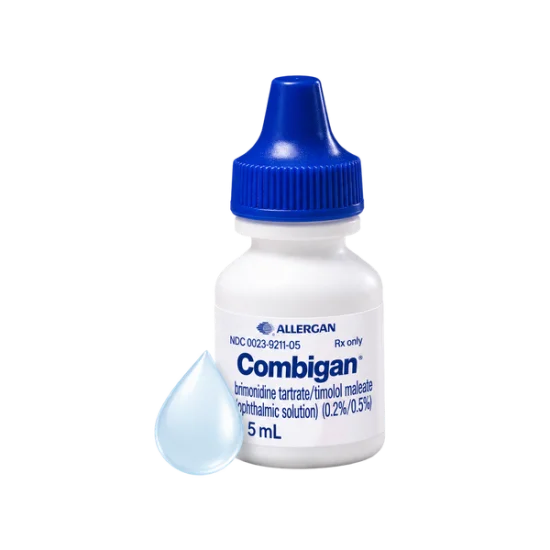
Combigan
Quality products
Fast & Discrete Delivery
Money-back guarantee

Combigan

3.7 (3 customer reviews)
Delivery: from 4 days
Payment
24/7 Support
Active ingredient: Brimonidine Tartrate, Timolol Maleate

Free delivery on orders from AED 860.00, free express delivery from AED 1,290.00

256-bit SSL
Certified pharmacy
Money-back guarantee

Raised intraocular pressure in open-angle glaucoma or ocular hypertension can gradually damage the optic nerve. Combigan is a brimonidine tartrate and timolol maleate ophthalmic solution for adults whose eye pressure needs further reduction; its two agents reduce aqueous-humour formation, while brimonidine also supports fluid outflow [1].

Product information

Combigan is a brimonidine tartrate and timolol maleate ophthalmic solution for adults whose eye pressure needs further reduction; its two agents reduce aqueous-humour formation, while brimonidine also supports fluid outflow [1].

Ingredients

Active ingredient Pharmacological class Main action in the eye
Brimonidine tartrate Alpha-2 adrenergic agonist Reduces aqueous-humour production and supports uveoscleral outflow
Timolol maleate Non-selective beta-blocker Reduces aqueous-humour production

Pharmacological role of brimonidine tartrate

Brimonidine activates alpha-2 receptors in the ciliary body, the eye structure involved in producing aqueous humour. Aqueous humour is the clear fluid that maintains eye shape and nourishes internal tissues. When too much fluid is produced or drainage is impaired, pressure rises.

Brimonidine lowers this pressure through two routes. It reduces fluid production and increases an alternative drainage route called uveoscleral outflow. This dual effect explains why it is frequently used in pressure-lowering eye-drop regimens.

Pharmacological role of timolol maleate

Timolol reduces aqueous-humour production by blocking beta receptors in the ciliary epithelium. It does not restore optic nerve tissue already damaged by glaucoma. Its role is to help keep pressure controlled and reduce the chance of further damage.

Keep the dropper tip away from eyelashes, fingers, and the eye surface. Touching the tip is a common source of contamination and can make repeated use less hygienic.

Therapeutic indications

Combigan is used for elevated intraocular pressure in adults with open-angle glaucoma or ocular hypertension when one pressure-lowering medicine has not reduced pressure sufficiently. Ocular hypertension means pressure is above the normal range without confirmed optic-nerve damage. Open-angle glaucoma involves progressive optic-nerve injury with an open drainage angle.

Secondary glaucoma may require a different strategy because its cause can include inflammation, injury, steroid exposure, pigment dispersion, or another eye disorder. The underlying cause affects the treatment plan.

Clinical guidelines from NICE describe pressure reduction as a central part of glaucoma care, alongside optic-nerve assessment and visual-field monitoring [3]. The aim is not simply to reach a generic pressure number. The target is individualized according to baseline pressure, existing nerve damage, age, and the expected pace of disease progression.

Dosage and administration

Combigan is a prescription ophthalmic solution. The amount used and the daily schedule depend on the treatment purpose and are agreed with the prescriber managing the glaucoma or ocular hypertension.

Use the following technique for each prescribed application:

  • Wash and dry your hands.
  • Remove soft contact lenses before applying the drops.
  • Tilt the head back and pull the lower eyelid down to form a small pocket.
  • Instil the prescribed amount without touching the bottle tip to the eye or skin.
  • Close the eye gently and use punctal occlusion.
  • If another eye medicine is also prescribed, leave at least five minutes between products.
  • Reinsert contact lenses after at least 15 minutes.
Do not blink repeatedly after the drop goes in. One gentle eyelid closure keeps more solution on the eye surface than rapid blinking, which pushes fluid toward the tear duct.

A missed application should be used when remembered unless the next scheduled application is close. Do not double the amount to compensate. Repeatedly missed doses can allow pressure to rise without causing pain, so linking use to regular daily routines can be helpful.

When not to use it

Combigan should not be used with monoamine oxidase inhibitors. Care is also needed with medicines that slow the heart rate or lower blood pressure, including oral beta-blockers, some calcium-channel blockers, digoxin, clonidine, and certain antiarrhythmics.

Children and adolescents require specialist assessment because brimonidine can cause central nervous system depression in younger patients.

When this is not for you

This medication is not for you if you have bronchial asthma, a history of asthma, severe chronic obstructive pulmonary disease, marked sinus bradycardia, second- or third-degree heart block without a pacemaker, overt heart failure, or cardiogenic shock.

Tell the treating clinician about depression medicines, heart medicines, breathing conditions, diabetes, thyroid disease, circulation problems in the hands or feet, and planned surgery. Beta-blockers may mask warning signs of low blood glucose, such as a racing heartbeat. The FDA prescribing information also describes the risk of systemic beta-blocker effects from ophthalmic timolol [4].

Combigan is intended for adults unless an eye specialist gives a different instruction.

Possible side effects

Most reactions are local and mild, yet Combigan can enter the bloodstream through the tear ducts. Timolol is a beta-blocker, so systemic effects may resemble those of oral beta-blockers in susceptible people. Brimonidine may cause tiredness or reduced alertness in some users.

Ocular reactions Possible systemic reactions Urgent symptoms
Burning, stinging, redness, itching, blurred vision Fatigue, dry mouth, headache, dizziness Wheezing, fainting, chest pain, severe slow pulse, facial swelling

Eye redness, irritation, foreign-body sensation, watery eyes, dryness, and temporary blurred vision can occur. Brimonidine may also cause allergic-type conjunctival reactions, including persistent itching and redness. Timolol can slow the heart rate or worsen breathing problems because beta receptors are present outside the eye.

If vision is blurred immediately after application, wait until it clears before driving or working with machinery. The effect is often brief, but sharp vision is essential for safe tasks.

How it affects the body

Combigan combines two pressure-lowering pathways in one ophthalmic solution. Timolol mainly reduces fluid production, while brimonidine reduces production and promotes outflow. This complementary action can give greater intraocular-pressure reduction than relying on either component alone when monotherapy has not achieved the target pressure [2].

The optic nerve carries visual information from the eye to the brain. Glaucoma-related damage is often painless and may progress without early warning signs, which is why pressure control needs to be consistent. Combigan manages pressure; it does not create an immediate change in vision or reverse existing visual-field loss.

Common mistakes

Several avoidable habits can weaken pressure control or increase unwanted effects:

  • Applying drops inconsistently because glaucoma is often painless.
  • Using two eye products one after another without allowing time between them.
  • Letting the bottle tip touch the eye, lashes, or fingers.
  • Skipping punctal occlusion, which increases drainage into the nose.
  • Wearing soft contact lenses during instillation.
  • Assuming fatigue, shortness of breath, dizziness, or a slow pulse cannot be related to eye drops.
  • Stopping treatment after a normal pressure reading without a clinician’s plan.

A normal pressure result often means the treatment is doing its job. It does not mean glaucoma has disappeared.

Comparison

Comparison with pressure-lowering approaches

Approach How pressure is lowered When it may be preferred
Combigan combination drops Reduces fluid production and supports outflow When a single agent has not achieved sufficient pressure control
Prostaglandin analogue drops Increases aqueous-humour outflow Often selected as initial long-term therapy
Carbonic anhydrase inhibitor drops Reduces aqueous-humour production May be added when further pressure reduction is needed

A combination drop can reduce the number of separate bottles in a daily routine. The trade-off is that both active ingredients are used together, so contraindications to either brimonidine or timolol matter. A person with asthma, slow pulse, or certain heart-conduction disorders may need a different pressure-lowering option.

What doctors say

In clinical practice, eye specialists often move to a fixed combination such as Combigan when pressure remains above the individualized target on one medicine. The benefit is practical as well as pharmacological: fewer separate administrations may make a routine easier to maintain.

A clinician will also look beyond the pressure number. Visual-field changes, optic-disc findings, corneal thickness, adherence, and systemic health all shape treatment decisions. The World Health Organization identifies glaucoma as a major cause of irreversible vision impairment, which explains the emphasis on long-term pressure control rather than symptom relief alone [5].

Comparison

Careprost

Active ingredient: Bimatoprost
0.3mg
From AED 408.50
bottles
3.5 (5)

Combigan Current

Active ingredient: Brimonidine Tartrate, Timolol Maleate
0.2%0.5%
From AED 589.10
bottles
3.7 (3)

Comparison table: Glaucoma

Common questions

Can Combigan be used during pregnancy or breastfeeding?

Pregnancy and breastfeeding require an individualized risk-benefit decision because both brimonidine and timolol can be systemically absorbed after eye-drop use. The FDA prescribing information, revised in 2023, advises clinicians to weigh maternal eye-pressure control against potential fetal or infant exposure. Timolol may pass into breast milk, and brimonidine may cause sedation or low blood pressure in infants. Punctal occlusion reduces systemic exposure but does not remove it completely. The prescriber may adjust treatment after reviewing both conditions.

Which diet, exercise, and habits can support or hinder pressure control with Combigan?

No specific diet replaces pressure-lowering treatment for glaucoma. The American Academy of Ophthalmology's 2020 guidance discusses that regular moderate physical activity may support general cardiovascular health, while prolonged head-down positions can temporarily raise intraocular pressure. Heavy straining, smoking, inconsistent sleep patterns, and poor adherence can complicate pressure management. Avoid placing your head below your heart for extended periods during yoga or exercise if your ophthalmologist has advised against it.

What should be discussed before starting Combigan?

Discuss any asthma, chronic lung disease, slow pulse, heart block, heart failure, fainting episodes, diabetes, thyroid disease, depression treatment, and current heart medicines. The European Medicines Agency's 2024 product information for brimonidine-timolol eye drops highlights cardiovascular and respiratory precautions because timolol can enter systemic circulation. Mention all prescribed eye drops, contact-lens use, previous eye surgery, and planned procedures requiring anaesthesia. A history of allergic eye reactions to pressure-lowering drops is also relevant.

Is Combigan suitable for older adults?

Older adults can use Combigan when the prescriber considers it appropriate, yet coexisting heart, lung, and blood-pressure conditions deserve closer review. Timolol may contribute to slow pulse, fatigue, dizziness, or low blood pressure in vulnerable people. The WHO’s 2023 vision-health materials underline that glaucoma care often requires sustained follow-up, which is relevant when several medicines are taken each day. Punctal occlusion and a stable dosing routine can reduce avoidable problems.

Can Combigan be used by someone with asthma?

No; it is contraindicated. Bronchial asthma or a history of asthma rules out Combigan because timolol can trigger bronchospasm after systemic absorption. Severe chronic obstructive pulmonary disease is also a contraindication. FDA safety information from 2023 lists serious breathing reactions among the risks associated with ophthalmic beta-blockers. An ophthalmologist can select a pressure-lowering approach without timolol when respiratory disease is present.

Do you offer anonymous delivery?

Your order will be securely packed and shipped within 24 hours. This is exactly what your package will look like (images of an actual item sent). It has the size and look of a regular private letter (24x11x0.7 cm) and its contents cannot be seen.

Sources

  1. European Medicines Agency (2024). Combigan 2 mg/ml + 5 mg/ml eye drops, solution: Summary of Product Characteristics
  2. U.S. Food and Drug Administration (2023). Combigan: Prescribing Information
  3. National Institute for Health and Care Excellence (2022). Glaucoma: Diagnosis and Management (NG81)
  4. American Academy of Ophthalmology (2020). Primary Open-Angle Glaucoma Preferred Practice Pattern
  5. World Health Organization (2023). Blindness and Vision Impairment

Reviews: Combigan

Nadeem, 29
Al Khawaneej
Nearly two weeks
Verified
Rating: 2 out of 5
I used Combigan as part of my daily eye-drop routine for nearly two weeks. My eyes became persistently red and heavy, and I stopped after discussing the reaction with my eye doctor. The pressure benefit was not enough for me to continue with the irritation.
12 Oct 2026

Hamza, 67
Deira
Four months
Verified
Rating: 4 out of 5
I used Combigan for four months after my earlier drops were not keeping my pressure where it needed to be. The routine became easier because I had one bottle to remember, and my follow-up readings improved. I was satisfied with how straightforward it was to use.
29 Oct 2026
Suresh, 26
Dubai Marina
Six weeks
Verified
Rating: 5 out of 5
I stayed consistent with Combigan for six weeks and built it into my morning and evening routine. The bottle was easy to handle, and I felt reassured by having a clear treatment plan for my raised eye pressure. I was pleased with the progress at my next assessment.
9 Nov 2026
Get our free app Shop faster and track your orders 4.0 · 264 reviews Install