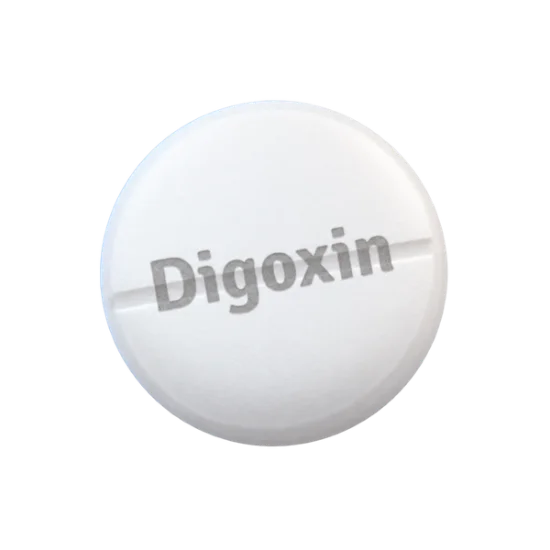
Digoxin
3.9 (4 customer reviews)It is prescribed for selected adults with heart failure or atrial fibrillation with a fast ventricular rate. Its slowing effect on electrical conduction helps control pulse rate.
Product information
In cardiac muscle, inhibition of the sodium-potassium pump by Digoxin raises calcium inside heart cells and strengthens each contraction.
Ingredients
Digoxin is a cardiac glycoside supplied as oral tablets. It inhibits the sodium-potassium pump in cardiac muscle, raising calcium inside heart cells and strengthening each contraction. Its use and frequency depend on the treatment purpose and are agreed with a doctor or pharmacist. Kidney function, electrolytes, ECG findings, and serum digoxin concentration may be reviewed during treatment.
Therapeutic indications
Digoxin is a cardiac glycoside used when a clinician needs to improve symptom control in selected heart-failure patients or reduce a rapid ventricular rate in atrial fibrillation. It is not a general-purpose heart tablet and does not cure the structural cause of heart failure or restore normal rhythm in every person.
Heart failure symptom support
Digoxin may help selected people with heart failure who remain symptomatic despite standard treatment or who also have atrial fibrillation. Its positive inotropic effect means that it increases the force of heart-muscle contraction.
Treatment decisions take account of kidney function, age, body size, heart rhythm, electrolyte balance, and concurrent medicines. It does not replace guideline-directed heart-failure treatment such as medicines that reduce fluid overload, neurohormonal stress, or hospital admissions.
Atrial fibrillation and supraventricular rate control
In atrial fibrillation, Digoxin mainly controls the ventricular rate rather than converting the rhythm back to normal. It slows electrical traffic through the atrioventricular node, the relay point between the upper and lower chambers of the heart.
Its rate-controlling effect can be less pronounced during physical exertion because sympathetic activity rises and vagal influence falls. This is one reason why cardiologists select rate-control treatment according to symptoms, blood pressure, activity level, and other heart conditions.
Dosage and administration
Digoxin is supplied as oral tablets. The amount used and how often it is taken depend on the reason for treatment and are agreed with a doctor or pharmacist.
A consistent routine helps clinicians interpret symptoms, pulse readings, and blood tests. Kidney function, potassium, magnesium, calcium, ECG findings, and serum digoxin concentration may all be reviewed during treatment. The FDA prescribing information stresses that a blood result must be interpreted alongside timing of the last dose, symptoms, and renal function. [1]
- Take the prescribed tablet at the same time each day.
- Swallow tablets with water and keep the timing consistent in relation to meals.
- Do not change the tablet amount because a pulse seems higher or lower on one day.
- Do not double a missed dose.
- Contact the prescriber for individual missed-dose advice if the omission is noticed late.
Kidney clearance matters greatly with Digoxin. Reduced kidney function can allow the medicine to accumulate, especially during acute illness or poor fluid intake.
When not to use it
Digoxin is not for you if you have ventricular fibrillation. It is also generally unsuitable in known hypersensitivity to digoxin or other cardiac glycosides.
Extra specialist assessment is required with significant bradycardia, advanced atrioventricular block without pacing support, hypertrophic obstructive cardiomyopathy, acute myocardial infarction, severe kidney impairment, or major electrolyte disturbance. Low potassium, low magnesium, and high calcium can all increase arrhythmia risk.
When this is not for you
Digoxin is not for you if you have ventricular fibrillation. It is also generally unsuitable in known hypersensitivity to digoxin or other cardiac glycosides.
Possible side effects
Mild adverse effects can include nausea, vomiting, poor appetite, abdominal discomfort, dizziness, tiredness, confusion, and visual disturbance. Some people describe blurred vision or yellow-green colour changes.
Persistent vomiting or diarrhoea deserves prompt attention because dehydration can alter kidney function and electrolytes. Hypokalemia, meaning low potassium, makes the heart more sensitive to Digoxin and raises toxicity risk.
Common adverse effects
Nausea and appetite loss may arise before more serious toxicity signs, though neither symptom proves toxicity by itself. Dizziness may also reflect low blood pressure, dehydration, an arrhythmia, or another medicine.
Bradycardia and conduction problems
A slow heartbeat may cause weakness, dizziness, chest discomfort, breathlessness, or fainting. Serious toxicity may trigger heart block or dangerous ventricular arrhythmias.
Urgent assessment is needed for fainting, severe dizziness, chest pain, confusion, a very slow pulse, severe vomiting, or new irregular pounding in the chest. The FDA identifies bradycardia, visual changes, gastrointestinal symptoms, and arrhythmias among clinically relevant signs of digoxin toxicity. [3]
Do not start potassium, magnesium, herbal products, or salt substitutes for digoxin-related symptoms without kidney and electrolyte assessment. A supplement that seems harmless can materially change cardiac risk.

How it affects the body
Digoxin blocks sodium-potassium ATPase in heart cells. This raises intracellular sodium and indirectly increases intracellular calcium, allowing the heart to contract with greater force.
Positive inotropy means stronger cardiac contraction. Vagal activity is the parasympathetic signal that slows the heart. Atrioventricular-node conduction is the electrical pathway that determines how many atrial impulses reach the ventricles.
Contractility and cardiac output
A stronger contraction may improve circulation in carefully selected patients with reduced pumping function. The benefit is symptom support rather than a promise of improved survival for every person.
The same calcium-related mechanism can cause harm if digoxin exposure rises too high. Kidney impairment, dehydration, and electrolyte changes can increase exposure even when the tablet routine has not changed.
Atrioventricular-node conduction
By increasing vagal tone, Digoxin slows conduction through the atrioventricular node. That can reduce a rapid ventricular response in atrial fibrillation.
Excessive slowing can lead to a slow heartbeat, called bradycardia, or to heart block. An ECG records these electrical effects and helps clinicians distinguish intended rate control from excessive conduction slowing.
Common mistakes
- Doubling a missed tablet.
- Treating vomiting or diarrhoea as minor while continuing without clinical advice.
- Starting potassium-containing products independently.
- Assuming a normal pulse excludes toxicity.
- Forgetting to mention amiodarone, antibiotics, thyroid treatment, or herbal supplements.
- Taking tablets at widely different times each day.
Comparison
Digoxin has a distinct role because it can slow heart rate without the same degree of blood-pressure reduction seen with some alternatives. Its limitation is the need for careful interaction, kidney, and electrolyte monitoring.
| Treatment approach | Main clinical role | Main limitation |
|---|---|---|
| Digoxin cardiac glycoside | Rate control in selected atrial fibrillation; symptom support in selected heart failure | Narrow safety margin and renal dependence |
| Beta blocker | Rate control and many heart-failure indications | May lower blood pressure or worsen fatigue |
| Rate-limiting calcium-channel blocker | Rate control in selected patients | May be unsuitable in some forms of heart failure |
Beta blockers are often preferred when exertional heart-rate control is needed. Selected calcium-channel blockers may be used for atrial fibrillation rate control when heart pumping function allows it.
Heart-failure care may also include diuretics, renin-angiotensin system medicines, mineralocorticoid receptor antagonists, and sodium-glucose cotransporter-2 inhibitors. European Society of Cardiology guidance frames Digoxin as a selective option within a broader treatment plan rather than a substitute for those therapies. [2]
What doctors say
Doctors commonly focus on three questions: whether Digoxin still has a clear role, whether the pulse and ECG show appropriate control, and whether kidney or electrolyte changes have altered risk. A stable routine does not remove the need for reassessment after an acute illness or a new prescription.
The aim is controlled symptoms and an appropriate ventricular rate, not simply achieving a lower pulse. Some people need a different rate-control strategy when symptoms continue during walking or climbing stairs.
Comparison
Common questions
Can Digoxin be combined with antiarrhythmic medicines?
Digoxin can be combined with antiarrhythmics only under individual clinical supervision. Amiodarone, propafenone, disopyramide, and flecainide may alter digoxin exposure or add to slow-heartbeat and conduction risks. The FDA prescribing information published in 2016 identifies amiodarone as an interaction requiring close review. Never stop either medicine independently.
Is Digoxin used in people under 18?
Digoxin may be used in paediatric cardiology for selected conditions, but children require specialist dosing and monitoring because kidney maturation, body size, and heart diagnosis affect treatment. The WHO Model List for Children, updated in 2023, includes digoxin for defined clinical use. Adult tablets should never be repurposed for a child without a paediatric prescription plan.
How long does one Digoxin tablet keep working?
Digoxin has a prolonged effect, and its duration depends strongly on kidney function and the individual treatment plan. It is taken on a regular schedule to maintain stable exposure rather than to provide immediate relief from a single episode of palpitations. The FDA’s 2016 LANOXIN prescribing information describes renal elimination as a key factor affecting persistence in the body.
Which habits can help or hinder Digoxin treatment?
Consistent tablet timing, adequate fluid intake when medically appropriate, and attending blood-test appointments support safer treatment. Vomiting, diarrhoea, crash dieting, dehydration, and unreviewed supplements can disturb potassium or kidney function. European Society of Cardiology guidance published in 2024 supports structured review of comorbidities and concurrent medicines in atrial fibrillation care.
Which condition rules out Digoxin use?
Ventricular fibrillation rules out Digoxin use because it can worsen dangerous ventricular rhythm disturbances. Significant conduction disease, severe bradycardia, and major electrolyte abnormalities also need specialist assessment before treatment. The FDA’s 2016 Digoxin prescribing information lists ventricular fibrillation as a contraindication.
Can Digoxin be taken with food or on an empty stomach?
Digoxin tablets may be taken with or without food, provided the routine stays consistent. High-fibre meals can reduce absorption for some people, so a stable pattern makes clinical interpretation easier if symptoms or blood results change. The FDA product information published in 2016 supports consistent administration rather than frequent changes in timing.
What happens if Digoxin is stopped, and does it need tapering?
Stopping Digoxin can allow a previously controlled heart rate to rise or heart-failure symptoms to return. A taper is not always required, yet the decision depends on the rhythm diagnosis, heart function, and other rate-control medicines. The 2021 European Society of Cardiology heart-failure guideline supports treatment review based on clinical status rather than abrupt self-directed changes.
Do you offer anonymous delivery?
Your order will be securely packed and shipped within 24 hours. This is exactly what your package will look like (images of an actual item sent). It has the size and look of a regular private letter (24x11x0.7 cm) and its contents cannot be seen.
Sources
- U.S. Food and Drug Administration (2016). LANOXIN (digoxin) prescribing information.
- European Society of Cardiology (2021). ESC Guidelines for the diagnosis and treatment of acute and chronic heart failure.
- U.S. Food and Drug Administration (2016). LANOXIN (digoxin) prescribing information: warnings and adverse reactions.