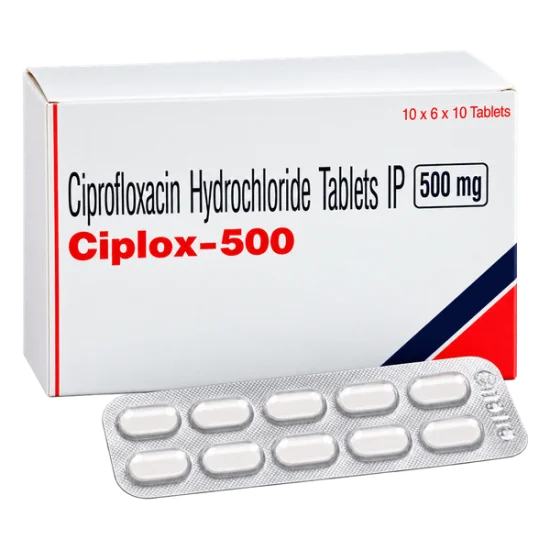
Ciplox
3.8 (4 customer reviews)Ciplox tablets contain ciprofloxacin hydrochloride and are used when a clinician identifies an infection where this antibiotic is an appropriate option. It stops bacteria from reproducing by blocking enzymes needed for bacterial DNA replication.
Product information
Ciprofloxacin, the active ingredient of Ciplox, is a fluoroquinolone antibiotic for susceptible bacterial infections in adults.
Ingredients
Ciplox contains ciprofloxacin hydrochloride per tablet. Ciprofloxacin belongs to the fluoroquinolone class of antibiotics, a group used for selected urinary, gastrointestinal, respiratory, skin, bone, and joint infections caused by susceptible bacteria.
Fluoroquinolones are bactericidal antibiotics. This means they kill susceptible bacteria rather than merely slowing their growth. Ciplox does not treat colds, influenza, viral sore throat, or other viral illnesses. Unnecessary use encourages antibiotic resistance, which is why WHO and NICE antimicrobial-stewardship guidance supports selecting antibiotics for a clear bacterial indication. [1]
Therapeutic indications
Ciprofloxacin may be prescribed for infections where laboratory susceptibility, infection site, allergy history, and previous antibiotic exposure support its use. The choice is clinical, not automatic: the same symptom can have bacterial, viral, inflammatory, or non-infectious causes.
Common clinical uses include:
- Urinary tract infections: complicated urinary infections, kidney infections, and selected bacterial prostatitis cases.
- Gastrointestinal infections: selected bacterial diarrhoeal illnesses, including infections caused by susceptible enteric bacteria.
- Respiratory infections: limited situations involving susceptible Gram-negative bacteria, including some exacerbations in people with chronic lung disease.
- Skin and soft-tissue infections: selected infections when the causative organism is sensitive to ciprofloxacin.
- Bone and joint infections: longer, specialist-led courses may be used for susceptible organisms.
- Certain serious systemic infections: clinicians may use ciprofloxacin as part of a broader treatment plan where culture results support it.
Ciplox is not a first-choice antibiotic for every urinary or chest infection. Culture testing can be valuable when symptoms recur, the infection is severe, or previous antibiotics have failed.
Dosage and administration
Ciplox is supplied as tablets. The regimen for the chosen strength should be confirmed with a healthcare professional before starting, because treatment schedules differ by infection type, kidney function, severity, and culture results.
For adults with selected infections, ciprofloxacin is often prescribed at regular 12-hour intervals. Some infections need a shorter course, while bone, prostate, or complicated infections may require longer treatment under clinical follow-up.
- Take each dose at the same times daily.
- Swallow the tablet with a full glass of water.
- Maintain normal fluid intake unless fluid restriction has been prescribed.
- Finish the prescribed course unless a clinician tells you to stop because of a serious adverse reaction.
- If a dose is missed, take it when remembered unless the next dose is due soon. Do not take two doses together.
When not to use it
Ciplox should not be used with tizanidine because ciprofloxacin can greatly raise tizanidine levels, causing profound drowsiness, low blood pressure, and slow heart rate.
Contraindications and high-risk groups
Extra caution or an alternative antibiotic may be needed if you have:
- A previous fluoroquinolone-related tendon injury.
- Myasthenia gravis, as ciprofloxacin can worsen muscle weakness.
- A history of seizures or conditions that lower the seizure threshold.
- A known aortic aneurysm, previous aortic dissection, or major vascular risk factors.
- Severe kidney impairment, because dosing may need adjustment.
- Diabetes treated with insulin or glucose-lowering medicines.
- A prolonged QT interval, low potassium, or use of medicines that affect heart rhythm.
- Pregnancy or breastfeeding, where the prescriber weighs infection severity against treatment options.
Ciprofloxacin may increase the effect of warfarin and other anticoagulants. People taking warfarin may need closer INR monitoring during and shortly after treatment. It can also raise theophylline exposure, increasing the risk of nausea, agitation, tremor, arrhythmia, or seizures. FDA prescribing information lists these interactions and advises avoiding ciprofloxacin with tizanidine. [3]
When this is not for you
Ciplox is not for you if you have had a serious allergic reaction to ciprofloxacin, another fluoroquinolone, or any tablet ingredient.
Possible side effects
Most people who use ciprofloxacin tolerate it without severe problems. Nausea, diarrhoea, stomach discomfort, headache, dizziness, sleep disturbance, and altered taste can occur. Mild loose stools may settle during treatment, but persistent or severe diarrhoea needs assessment because antibiotics can disturb normal gut bacteria.
Stop Ciplox and seek urgent medical assessment for tendon pain, swelling, or a snapping sensation near the ankle, shoulder, elbow, hand, or knee. Tendon injury can occur during treatment or months later. New burning pain, tingling, numbness, weakness, marked agitation, confusion, hallucinations, severe mood changes, fainting, or symptoms of severe low blood sugar also require urgent attention.
Sun sensitivity can also occur. Use sun protection and avoid prolonged intense sunlight if your skin becomes unusually reactive. FDA safety communications describe rare but serious tendon, nerve, mental-health, and blood-glucose effects with systemic fluoroquinolones. [4]

How it affects the body
Ciprofloxacin enters bacterial cells and blocks two enzymes: DNA gyrase and topoisomerase IV. These enzymes manage the twisting, copying, and separation of bacterial DNA. Once they are inhibited, bacteria cannot duplicate their genetic material correctly, leading to bacterial cell death.
Human cells do not rely on these enzymes in the same way. That difference allows ciprofloxacin to target bacteria, though fluoroquinolones can still affect tendons, nerves, blood glucose regulation, and the central nervous system in some people. EMA and MHRA safety restrictions place fluoroquinolones such as ciprofloxacin in a more selective role because rare adverse effects can be prolonged or disabling. [2]
Common mistakes
- Taking tablets with iron, zinc, magnesium, or calcium supplements at the same time.
- Stopping after symptoms improve without completing the prescribed course.
- Using leftover antibiotics for a new illness.
- Ignoring new tendon discomfort because it seems minor.
- Taking a double dose after forgetting one.
- Assuming diarrhoea is always harmless during antibiotic treatment.
- Drinking too little fluid during a urinary infection.
- Starting Ciplox without confirming the regimen for the chosen strength with a healthcare professional.
Comparison
Antibiotics are selected by likely bacteria, infection site, local resistance patterns, allergies, kidney function, and culture results. Ciplox has useful activity against many Gram-negative bacteria, yet it is not interchangeable with every antibiotic.
| Active ingredient or group | Class and main role | Key difference from ciprofloxacin |
|---|---|---|
| Ciprofloxacin | Fluoroquinolone; selected Gram-negative infections | Strong activity against many urinary and gastrointestinal pathogens |
| Levofloxacin | Fluoroquinolone | Often used when respiratory coverage is needed; carries similar class warnings |
| Amoxicillin or amoxicillin/clavulanate | Penicillin antibiotic | Often used for susceptible ear, throat, dental, chest, and skin infections |
| Doxycycline | Tetracycline antibiotic | Used for selected respiratory, skin, tick-borne, and atypical infections |
Augmentin contains amoxicillin with clavulanic acid. Ceftriaxone is a cephalosporin commonly used by injection for more severe infections, while Bactrim combines trimethoprim with sulfamethoxazole and may be used for selected urinary or skin infections. None is automatically better; bacterial susceptibility determines the useful option.
What doctors say
In clinical practice, prescribers often reserve ciprofloxacin for infections where bacterial susceptibility or the infection pattern makes its benefits meaningful. It can be highly useful for selected Gram-negative infections, yet it is not the preferred answer for every uncomplicated infection.
Doctors also look beyond the diagnosis. Kidney function, previous tendon symptoms, glucose control, heart-rhythm history, and current medicines can change whether Ciplox is appropriate. The goal is a targeted course with a clear reason for using it.
Comparison
Common questions
Can older adults use Ciplox?
Older adults can use ciprofloxacin when it is clinically appropriate, though clinicians pay closer attention to kidney function, tendon history, heart-rhythm risk, and interacting medicines. The risk of tendon injury is higher in older people, especially when corticosteroids are also used. EMA restrictions issued in 2019 advise careful use of fluoroquinolones in people at higher risk of serious adverse effects. [5]
How long does one Ciplox dose keep working?
Ciprofloxacin levels rise after swallowing a tablet and decline over time, which is why many adult regimens use regular 12-hour intervals. The antibacterial effect depends on keeping drug exposure above the level needed for the susceptible bacteria. A missed dose can create a longer gap in coverage, so regular timing matters. The exact schedule remains linked to the infection and kidney function. The FDA's 2016 Cipro prescribing information links dosing intervals to the infection and renal function.
How soon does Ciplox become noticeable?
Some people notice less pain, fever, urgency, or diarrhoea within 48 to 72 hours when the infection is susceptible. Improvement may be slower with prostate, bone, joint, or complicated infections. Symptoms that worsen after treatment begins can signal resistance, a complication, or a different diagnosis. WHO guidance on responsible antibiotic use supports reassessment when clinical response is poor. The WHO's 2023 AWaRe antibiotic book supports reassessment when improvement is not seen.
Can Ciplox be combined with mineral supplements?
Ciplox should not be taken at the same time as supplements containing iron, zinc, magnesium, calcium, or aluminium. These minerals can form complexes with ciprofloxacin in the digestive tract, leaving less antibiotic available for absorption. Separate Ciplox by at least two hours before or six hours after these supplements. The same spacing applies to many antacids and sucralfate. The FDA's 2016 Cipro prescribing information describes this separation because mineral products reduce absorption.
Which symptoms require urgent medical help?
Urgent assessment is needed for facial swelling, breathing difficulty, widespread rash, severe watery or bloody diarrhoea, fainting, severe palpitations, seizures, or sudden severe pain in the chest, back, or abdomen. Stop treatment and seek help promptly for tendon pain or swelling, new numbness or burning pain, severe confusion, or major mood changes. These symptoms are uncommon, yet fluoroquinolone safety warnings treat them seriously. A clinician can determine whether Ciplox should be stopped and replaced. The EMA's 2019 fluoroquinolone safety review identifies tendon, nerve, and mental-health reactions as reasons for prompt assessment.
Can Ciplox be used under 18?
Ciprofloxacin is not routinely used in children and adolescents because fluoroquinolones can affect developing joints and tendons. Specialists may prescribe it for specific serious infections when the likely benefit outweighs the risk and suitable alternatives are limited. The decision is based on the organism, infection severity, age, weight, and clinical setting. Adult tablets should not be self-selected for a child. The FDA's 2016 Cipro prescribing information reserves pediatric use for specific indications when benefits outweigh risks.
Do you offer anonymous delivery?
Your order will be securely packed and shipped within 24 hours. This is exactly what your package will look like (images of an actual item sent). It has the size and look of a regular private letter (24x11x0.7 cm) and its contents cannot be seen.
Sources
- World Health Organization (2023). The WHO AWaRe antibiotic book: providing guidance on antibiotic choice, dose and duration of treatment.
- European Medicines Agency (2019). Disabling and potentially permanent side effects lead to suspension or restrictions of quinolone and fluoroquinolone antibiotics.
- U.S. Food and Drug Administration (2016). CIPRO (ciprofloxacin hydrochloride) tablets: Prescribing Information.
- U.S. Food and Drug Administration (2018). FDA reinforces safety information about serious low blood sugar levels and mental health side effects with fluoroquinolone antibiotics.
- European Medicines Agency (2019). Quinolone- and fluoroquinolone-containing medicinal products: referral assessment report.