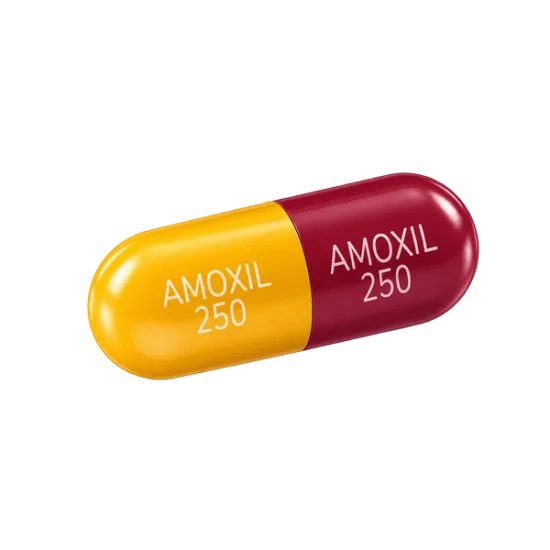
Amoxicillin, the active ingredient of Amoxil, is a penicillin-class antibiotic used for susceptible bacterial infections. It kills bacteria by disrupting their protective cell wall during growth.
Product information
Amoxicillin is the active ingredient in Amoxil and belongs to the penicillin class of antibiotics. It is used for susceptible bacterial infections, including respiratory, ear, throat, urinary, dental, skin, and certain stomach infections.
Ingredients
Amoxil contains amoxicillin as its active ingredient. Amoxicillin belongs to the penicillin class of antibiotics and works by disrupting the protective cell wall of susceptible bacteria during growth.
Therapeutic indications
Amoxil treats infections caused by bacteria that are sensitive to amoxicillin. It does not treat viral illnesses such as colds, influenza, or most viral sore throats. The World Health Organization identifies antimicrobial stewardship as essential because antibiotics work best when matched to a confirmed or strongly suspected bacterial infection [1]. NICE and the Centers for Disease Control and Prevention (CDC) likewise promote targeted antibiotic use.
Respiratory and ENT infections commonly treated with amoxicillin include:
Bacterial chest infections, including selected cases of bronchitis
Community-acquired pneumonia when the likely bacteria are susceptible
Amoxil may also be prescribed for urinary tract infections, skin and soft tissue infections, and other localised bacterial infections. For stomach ulcers linked with Helicobacter pylori, amoxicillin is used as one part of combination treatment with acid-suppressing therapy and another antibacterial agent.
Infection area
Examples of infections
Role of amoxicillin
Airways and ENT
Pneumonia, sinusitis, otitis media, tonsillitis
Targets susceptible bacteria
Urinary and skin
UTIs, cellulitis, infected wounds
Used when bacterial sensitivity is expected
Dental and stomach
Dental abscess, H. pylori ulcer regimen
Often part of a defined treatment plan
Symptoms can improve before bacteria have been fully cleared. That is why the prescribed course should be completed unless a prescriber changes the plan.
A sore throat with cough, runny nose, and hoarseness is often viral rather than bacterial. Amoxil should be used only for the infection it was prescribed to treat.
Dosage and administration
Amoxil is supplied here as capsules. The regimen for the chosen strength is confirmed with a healthcare professional before starting, since the appropriate schedule depends on the infection site, severity, kidney function, age, and bacterial susceptibility.
Use the capsules as follows:
Swallow each capsule whole with water.
Take doses at the same times each day.
Amoxil may be taken with or without food; taking it after food can help if nausea occurs.
Continue for the full prescribed duration, even if fever, pain, or swelling settles earlier.
Do not share remaining capsules with another person.
A common mistake is stopping after two or three symptom-free days. This may allow surviving bacteria to multiply again and can contribute to treatment failure. Another frequent error is saving unused antibiotics for a future sore throat, despite that future illness possibly being viral or requiring a different treatment.
If nausea appears soon after a capsule, take future doses after a light meal unless the prescriber has given a different instruction. This can improve comfort without reducing amoxicillin absorption in a clinically meaningful way.
When not to use it
Extra care is needed in the following situations:
Previous glandular fever, because amoxicillin can cause a prominent rash
Significant kidney impairment, where the dosing interval may require adjustment
Current warfarin therapy
Methotrexate treatment
Pregnancy or breastfeeding, where the infection and treatment plan should be assessed individually
Persistent diarrhoea, especially if it is severe, watery, bloody, or associated with fever
Antibiotic-associated diarrhoea is usually mild, yet severe diarrhoea can rarely be linked with Clostridioides difficile infection. Do not self-treat severe diarrhoea with anti-diarrhoeal medicines without clinical advice.
When this is not for you
This medication is not for you if you have had an immediate or severe allergic reaction to amoxicillin, penicillin, or another beta-lactam antibiotic. This includes prior anaphylaxis, severe swelling, breathing difficulty, or a serious blistering skin reaction after a penicillin.
Possible side effects
Amoxil is generally well tolerated, though gastrointestinal effects are common. Nausea, loose stools, mild diarrhoea, abdominal discomfort, and skin rash can occur. Diarrhoea may result from temporary changes to normal intestinal bacteria.
Severe reactions are uncommon but need urgent action. Stop taking Amoxil and seek urgent medical help for facial swelling, wheezing, throat tightness, fainting, blistering rash, or widespread skin peeling. These signs may indicate serious hypersensitivity.
A non-itchy mild rash and a rapidly spreading itchy rash are not interchangeable. Photographing a new rash before it fades can help a clinician assess its pattern accurately.
How it affects the body
Amoxil contains amoxicillin, a beta-lactam antibiotic within the penicillin class. Beta-lactams bind to bacterial proteins involved in building peptidoglycan, the rigid mesh that supports the bacterial cell wall. During cell division, the wall becomes weak and the bacterium breaks down because it can no longer withstand internal pressure.
This is a bactericidal action, meaning it kills susceptible bacteria rather than only slowing their multiplication. Human cells have no peptidoglycan cell wall, which explains the selective target of penicillin-class antibiotics.
Amoxicillin is not active against every bacterium. Some bacteria produce beta-lactamase enzymes that can inactivate it, while others have altered target proteins. Resistance is one reason clinicians may choose a different antibiotic or combine amoxicillin with a beta-lactamase inhibitor for selected infections. The European Medicines Agency describes amoxicillin as a well-established antibacterial agent whose use depends on local resistance patterns and infection type [2].
Common mistakes
Taking capsules at irregular times because symptoms have eased
Stopping treatment early without prescriber advice
Using a previous prescription for a new illness
Taking another person’s antibiotic
Forgetting to mention a previous penicillin reaction
Assuming all diarrhoea is harmless, even when it becomes severe
Missing warfarin or methotrexate interaction monitoring
Treating a suspected viral cold with an antibiotic
One detail patients often miss is that an amoxicillin-related rash can occur more readily during glandular fever. A clinician needs to know if extreme fatigue, swollen glands, or marked throat swelling were present before treatment began.
Comparison
Amoxicillin is available in different pharmaceutical presentations and may be prescribed under the non-proprietary name or another amoxicillin-containing product. Therapeutic decisions should focus on the active ingredient, dose regimen, formulation, and likely bacteria rather than commercial naming.
Antibiotic approach
Active ingredient or class
Typical clinical role
Amoxil
Amoxicillin
Susceptible respiratory, ENT, dental, urinary, and skin infections
Penicillin-class alternative
Phenoxymethylpenicillin
Often selected for narrower-spectrum throat infections
Beta-lactamase inhibitor combination
Amoxicillin with clavulanic acid
Considered when beta-lactamase-producing bacteria are more likely
Amoxicillin has a useful role in many common infections, but broader-spectrum treatment is not automatically better. A narrower antibiotic can be preferable when it covers the likely pathogen, because it places less pressure on normal gut bacteria and may reduce selection for resistance.
What doctors say
In clinical practice, prescribers focus first on whether the infection is likely bacterial and whether amoxicillin covers the suspected organism. A cough alone does not establish bacterial bronchitis, and yellow mucus alone does not prove that an antibiotic is needed.
Doctors also look for warning signs that may require a different approach, such as shortness of breath, dehydration, high fever that persists, spreading redness around a wound, flank pain with a UTI, or inability to swallow fluids. For dental infections, drainage or dental treatment may be needed because antibiotics do not remove the source of an abscess.
Amoxil works best when the diagnosis, dose schedule, and treatment duration fit the infection. The WHO’s 2025 antimicrobial-resistance materials continue to stress targeted antibiotic use and completion of appropriately prescribed treatment [3].
Can Amoxil be combined with warfarin, allopurinol, or supplements?
Warfarin requires special attention because antibiotics, including amoxicillin, can alter INR control in some people. Allopurinol may increase the chance of a rash with amoxicillin. Most standard vitamin supplements do not directly block amoxicillin, though every supplement should still be declared if it contains multiple active ingredients or affects blood clotting. The EMA’s 2024 amoxicillin product information describes the need for caution with anticoagulants, allopurinol, probenecid, and methotrexate [4].
What is the best time of day to take Amoxil?
Take Amoxil at the times set in the prescribed schedule, spacing doses as evenly as possible across waking and sleeping hours. It can be taken with food or without food. A morning dose followed by irregular timing for later doses is less useful than a consistent routine. A written reminder can help maintain the interval. Guidance published by the WHO in 2025 supports adherence to prescribed antibiotic schedules to maintain treatment effectiveness.
Can Amoxil capsules be split, crushed, or chewed?
Amoxil capsules should be swallowed whole with water. Opening, crushing, or chewing a capsule can leave an unpleasant taste and may make it difficult to receive the intended amount. People who cannot swallow capsules should discuss a more suitable amoxicillin formulation with the prescriber. The EMA’s 2024 information on amoxicillin formulations supports selecting a formulation that matches the patient’s ability to take it correctly.
What should I do if I miss an Amoxil dose?
Take the missed dose when remembered unless the next scheduled dose is close. If it is nearly time for the next dose, skip the missed one and return to the usual schedule. Do not take two doses together to compensate. The British National Formulary’s 2024 antibacterial guidance advises avoiding double doses after a missed antibiotic dose.
Can I drive or work with machinery while taking Amoxil?
Amoxil does not usually impair alertness or concentration. A person who develops dizziness, severe nausea, or a significant allergic reaction should not drive or operate machinery until well. The infection itself can also reduce concentration through fever, poor sleep, or pain. The EMA’s 2023 amoxicillin safety information records dizziness as an uncommon possible adverse effect.
Can children and teenagers use Amoxil?
Amoxicillin is used in children and adolescents for selected bacterial infections, including ear and throat infections. The dose and formulation are based on body weight, infection type, and kidney function, so an adult capsule schedule must never be copied for a child. WHO paediatric antibiotic guidance published in 2024 supports weight-based prescribing for children. A clinician selects the appropriate amoxicillin presentation for the child.
How long does an Amoxil course last, and is long-term use acceptable?
Course length varies with the infection, its severity, the site involved, and response to treatment. Short courses are common for uncomplicated infections, while some conditions need longer planned treatment or combination therapy. Long-term antibiotic use is not routine and requires ongoing clinical review because it can affect gut flora and promote resistance. WHO antimicrobial stewardship guidance from 2025 supports using the shortest effective course selected for the confirmed clinical indication.
Do you offer anonymous delivery?
Your order will be securely packed and shipped within 24 hours. This is exactly what your package will look like (images of an actual item sent). It has the size and look of a regular private letter (24x11x0.7 cm) and its contents cannot be seen.
Sources
World Health Organization (2023). The WHO AWaRe antibiotic book: antibiotic selection, dose, and duration at the point of care (2022).
European Medicines Agency (2024). Summary of Product Characteristics (SmPC) — amoxicillin.
World Health Organization (2025). Antimicrobial resistance fact sheet.
European Medicines Agency (2024). Patient Information Leaflet (PIL) — amoxicillin.
Reviews: Amoxil
T
Tariq, 52
Umm Al Quwain
Verified
Rating: 4.5 out of 5
I used the capsules for a dental infection after the swelling started to spread around one tooth. The throbbing pain eased by the second day, and I was able to sleep normally again. I completed the prescribed course and was satisfied with the result.
3 Nov 2026
A
Adnan, 34
Al Majaz
Verified
Rating: 1.5 out of 5
I took it for a throat infection, but I developed loose stools and stomach cramping after the first few doses. The throat felt better, but the stomach symptoms were difficult at work. I stopped and spoke with my doctor about a different plan.
10 Nov 2026
U
Usman, 48
Jebel Ali
Verified
Rating: 5 out of 5
I had persistent sinus pressure and facial pain before starting treatment. By the third day, the pressure around my eyes had reduced and I could sleep without waking from the headache. The improvement felt gradual but clear.
12 Oct 2026
K
Karim K., 31
Al Dhaid
Verified
Rating: 5 out of 5
The capsules were prescribed after a painful gum infection. The swelling reduced over several days, and eating became much easier. I appreciated having a straightforward capsule schedule that fit around my workday.