Skip to content
Save up to 80% Fast & Discrete Delivery
Ampicillin
Quality products
Fast & Discrete Delivery
Money-back guarantee

Ampicillin

4 (5 customer reviews)
Delivery: from 4 days
Payment
24/7 Support
Active ingredient: Ampicillin

Free delivery on orders from AED 860.00, free express delivery from AED 1,290.00

256-bit SSL
Certified pharmacy
Money-back guarantee

Ampicillin is an aminopenicillin antibiotic for susceptible bacterial infections, including selected respiratory, urinary, gastrointestinal, skin, and soft-tissue infections. It works by interfering with bacterial cell-wall construction; how much to use and how often depends on the purpose of treatment and is agreed with a doctor or pharmacist.

Product information

Ampicillin, the active ingredient of Ampicillin, is an aminopenicillin antibiotic used for susceptible bacterial infections.

Ingredients

Ampicillin contains ampicillin as its active ingredient. Ampicillin is an aminopenicillin antibiotic used for susceptible bacterial infections.

Therapeutic indications

Medical Uses and Indications of Ampicillin

Ampicillin belongs to the broad-spectrum penicillin group of antibiotics. Its activity covers selected Gram-positive and Gram-negative bacteria, though resistance is common in some organisms and treatment should be guided by the infection site, culture results, and local susceptibility data.

Clinicians may use oral ampicillin for infections caused by susceptible organisms, including certain respiratory tract, urinary tract, gastrointestinal, skin, and soft-tissue infections. It also has a recognised role against Enterococcus species and Listeria monocytogenes, though severe infections with these pathogens often need hospital-based treatment and a different route of administration.

Targeted Bacterial Infections

Ampicillin only treats bacterial infections. It does not treat influenza, common colds, or other viral illnesses.

Its antibacterial spectrum can include:

  • Streptococcus species
  • Enterococcus faecalis when laboratory testing shows susceptibility
  • Listeria monocytogenes
  • Some strains of Haemophilus influenzae
  • Selected strains of Escherichia coli, Proteus mirabilis, and Salmonella

The World Health Organization classifies aminopenicillins among antibiotics that require careful stewardship because unnecessary use promotes antimicrobial resistance. [2]

A bacterial culture can change the treatment plan. If a laboratory result identifies resistance, continuing the same antibiotic may delay recovery and expose the gut to unnecessary antibiotic effects.

Dosage and administration

Ampicillin Capsule Strength and Administration

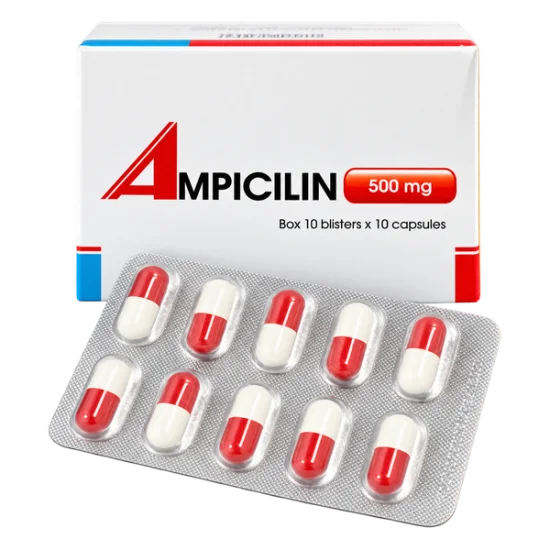
Ampicillin is supplied here as oral capsules containing ampicillin. Oral capsules are suited to infections where a clinician considers outpatient treatment appropriate and the person can swallow and absorb oral medicines.

How much to use and how often to take it depend on the purpose of treatment and are agreed with a doctor or pharmacist. Kidney function, body weight, infection severity, culture results, and other medicines can all affect the regimen.

  • Swallow each capsule whole with water.
  • Ampicillin is commonly taken on an empty stomach, about one hour before food or two hours after food, because food can reduce absorption.
  • Space doses as evenly as possible across the day when several doses are prescribed.
  • Complete the prescribed course, even when symptoms improve early.
  • If a dose is missed, take it when remembered unless the next dose is due soon. Do not take two doses together.
A frequent practical error is taking every capsule with a large meal. For oral ampicillin, separating it from food helps maintain more predictable absorption.

A second mistake is saving leftover capsules for a future sore throat or urinary symptom. The bacteria, infection site, and resistance pattern may be different next time.

Administration Guidelines and Dosage Protocols

Take Ampicillin exactly on the schedule agreed for the infection being treated. The capsule strength does not mean every adult should use the same number of capsules or the same course duration.

Oral treatment may be unsuitable when there is persistent vomiting, inability to swallow, severe systemic illness, suspected meningitis, or a rapidly worsening infection. Those situations need urgent clinical assessment rather than extra oral doses.

If nausea occurs after a capsule, do not move every dose to mealtimes without advice. A clinician can decide whether the symptom, the infection, or another medicine is the cause.

People with reduced kidney function may need an altered interval between doses because ampicillin is cleared mainly through the kidneys. Regular timing matters because beta-lactam antibiotics work best when drug concentrations remain above the susceptible bacterium’s inhibitory threshold for enough of the dosing interval.

When not to use it

Contraindications, Precautions, and Safety Warnings

  • Immediate severe allergic reaction to ampicillin, another penicillin, or a cephalosporin
  • Previous reaction involving anaphylaxis, breathing difficulty, collapse, or extensive blistering rash
  • Known infectious mononucleosis, due to a high likelihood of rash
  • Reduced kidney function
  • A history of severe antibiotic-associated diarrhoea or colitis
  • Pregnancy or breastfeeding, where the infection and treatment plan should be reviewed clinically
  • Use of anticoagulants such as warfarin, because antibiotic treatment can alter anticoagulant response
  • Use of allopurinol, which can increase the chance of a rash
  • Use of methotrexate, because penicillins may reduce methotrexate clearance

When this is not for you

Ampicillin is not for you if you have had an immediate severe allergic reaction to ampicillin, another penicillin, or a cephalosporin. A past reaction involving anaphylaxis, breathing difficulty, collapse, or extensive blistering rash is a major warning.

Tell the prescriber about oral contraceptives, supplements, anticoagulants, gout treatments, and medicines used for cancer or autoimmune disease. A detailed medication list is more useful than simply saying that no medicines are being taken.

Possible side effects

Adverse Reactions and Common Side Effects

Most people tolerate ampicillin without major difficulty. Digestive effects are the most familiar, since antibiotics can alter normal intestinal bacteria as well as act against the infection-causing organism.

Common or less serious effects can include:

  • Nausea or reduced appetite
  • Loose stools or diarrhoea
  • Abdominal discomfort
  • Mild skin rash
  • Oral or vaginal thrush after disruption of normal flora

A rash deserves attention during treatment. Ampicillin can cause a non-allergic rash in people with infectious mononucleosis, yet any rash accompanied by hives, facial swelling, wheeze, throat tightness, faintness, or breathing difficulty may indicate a serious allergic reaction and needs urgent care.

Severe or persistent watery diarrhoea, abdominal cramping, or fever during treatment or after it ends can signal Clostridioides difficile-associated colitis. This is uncommon, but it should not be managed by simply taking an anti-diarrhoeal medicine and carrying on with the capsules. The FDA prescribing information lists hypersensitivity reactions and antibiotic-associated colitis among clinically significant risks. [1]

New hives are different from a few isolated spots. Hives usually itch, move location, and rise above the skin; this pattern needs prompt assessment before another capsule is taken.

How it affects the body

Pharmacological Class and Mechanism of Action

Ampicillin is a beta-lactam antibiotic. Beta-lactams have a structural ring that interferes with enzymes bacteria need to maintain a stable protective wall. The medicine binds to penicillin-binding proteins, often shortened to PBPs. These bacterial enzymes cross-link peptidoglycan strands, which give the cell wall its rigidity. Once ampicillin blocks this process, a growing susceptible bacterium cannot maintain its structure and dies.

Some bacteria produce beta-lactamase enzymes. Beta-lactamase can break down ampicillin before it reaches its target, creating resistance. This explains why susceptibility testing matters more than assuming every infection will respond to a broad-spectrum penicillin.

Ampicillin does not suppress pain immediately. Improvement follows as bacterial growth falls and inflammation settles.

The European Medicines Agency describes pharmacokinetic and pharmacodynamic assessment as central to antimicrobial treatment, since antibiotic exposure must match the organism and infection site. [3]

Common mistakes

Common Patient Mistakes

The following errors can reduce the chance of successful treatment or increase adverse effects:

  • Taking doses at random times rather than keeping the intended intervals.
  • Taking capsules only when symptoms feel bothersome.
  • Stopping early because fever or discomfort has eased.
  • Doubling a missed dose.
  • Sharing capsules with a family member who has similar symptoms.
  • Treating a previous allergy as unimportant because it happened years ago.
  • Assuming diarrhoea is always harmless while continuing treatment despite fever or severe cramps.
  • Starting allopurinol or an anticoagulant without mentioning ongoing ampicillin treatment.

One subtle issue is test timing. If a sample for bacterial culture is needed, it is usually most informative before antibiotics are started, unless immediate treatment is clinically necessary.

Comparison

Comparative Profile of Ampicillin and Related Penicillins

Ampicillin and amoxicillin are related broad-spectrum penicillins. Both interfere with bacterial cell-wall synthesis, yet their oral absorption characteristics differ.

Feature Ampicillin Amoxicillin
Drug class Aminopenicillin beta-lactam Aminopenicillin beta-lactam
Oral absorption Reduced by food; often taken away from meals Less affected by food
Common clinical role Selected susceptible infections, including some enterococcal infections Frequently selected for susceptible respiratory, ear, dental, and urinary infections

Amoxicillin is often easier to schedule around meals, which can support adherence. Ampicillin remains clinically useful when the likely organism is susceptible and its particular spectrum fits the infection. Neither medicine treats beta-lactamase-producing organisms reliably without an appropriate inhibitor or confirmed susceptibility.

Antibiotic selection should not be based on which capsule seems stronger. It should match the organism and infection site.

What doctors say

Doctor Perspectives

In clinical practice, prescribers often focus first on the likely source of infection, allergy history, and any culture result rather than starting with a preferred antibiotic name. Ampicillin can be a focused choice for a susceptible organism, yet it is a poor fit when local resistance is likely or a patient has a serious beta-lactam allergy.

Doctors also look for signs that the diagnosis may be wrong. A sore throat caused by a virus, for example, will not improve because of ampicillin. Continuing antibiotics in that setting increases the chance of diarrhoea, rash, thrush, and resistant bacteria without treating the cause.

MOHAP antimicrobial stewardship principles align with the wider WHO approach: antibiotics should be selected for a documented or strongly suspected bacterial infection and reviewed when test results become available. [4]

When discussing treatment, mention any previous antibiotic that caused a rash and describe what happened. “Allergy” covers very different reactions, and the details can change which antibiotics remain appropriate.

Comparison

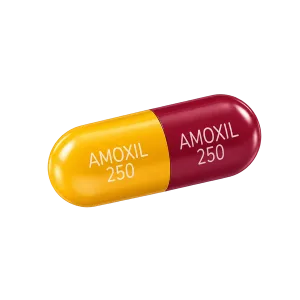
Amoxil

Active ingredient: Amoxicillin
250mg 500mg
From AED 335.40
pills
4 (4)

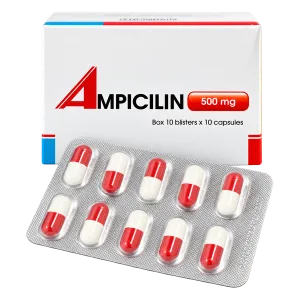
Ampicillin Current

Active ingredient: Ampicillin
250mg 500mg
From AED 344.00
pills
4 (5)

Bactrim

Active ingredient: Sulfamethoxazole, Trimethoprim
480mg 960mg
From AED 399.90
pills
4.5 (4)

Cefadroxil

Active ingredient: Cefadroxil
250mg 500mg
From AED 378.40
pills
4 (3)

Chloramphenicol

Active ingredient: Chloramphenicol
500mg
From AED 829.90
pills
4 (3)

Comparison table: Antibiotics

Common questions

Can Ampicillin be used by people under 18?

Ampicillin can be prescribed for children and adolescents when a clinician considers it appropriate for the confirmed or suspected bacterial infection. Paediatric treatment is based on body weight, infection type, kidney function, and the child’s ability to use the selected form, so an adult capsule schedule should never be copied for a child. The WHO AWaRe antibiotic framework, updated in 2023, supports targeted antibiotic use in all age groups to limit resistance. A paediatric clinician chooses the formulation and regimen.

What should happen if Ampicillin does not produce the expected result?

Persistent fever, worsening pain, spreading redness, breathing difficulty, vomiting, or no meaningful improvement within the timeframe given by the prescriber may mean the organism is resistant, the dose plan needs adjustment, or the illness has another cause. Do not add leftover antibiotics or take extra capsules. FDA prescribing information from 2011 stresses that antibacterial treatment should be used for proven or strongly suspected bacterial infection, since inappropriate use does not improve viral illness. A clinician may need a culture, examination, or a different treatment approach.

Can alcohol be used while taking Ampicillin?

Ampicillin does not have the classic direct alcohol interaction seen with a few other antibiotics. Alcohol can still worsen nausea, dehydration, dizziness, and poor sleep while the body is recovering from an infection. EMA antimicrobial guidance published in 2017 supports treatment plans that achieve reliable antibiotic exposure, and heavy drinking can make adherence less reliable. Avoiding alcohol is sensible if the infection has caused fever, vomiting, diarrhoea, or poor intake.

Does Ampicillin cause diarrhoea?

Yes. Mild loose stools can occur because ampicillin changes the balance of bacteria in the intestine while treating an infection. Diarrhoea that is severe, persistent, watery, bloody, or paired with cramps or fever requires urgent medical assessment because it can be linked to C. difficile colitis. The FDA’s 2011 prescribing information identifies this as a clinically significant antibiotic-related complication. Do not take medicines that stop bowel movements without medical advice when these warning signs occur.

What happens when Ampicillin is stopped, and does it need tapering?

Ampicillin does not cause physical dependence and does not require tapering. The key issue is whether treatment has reached the planned endpoint; stopping early can allow surviving bacteria to multiply again and may contribute to resistance. NICE antimicrobial stewardship guidance issued in 2015 supports review of antibiotic duration according to the infection and clinical response, rather than arbitrary continuation or self-directed early stopping. If a serious allergic reaction occurs, further doses should not be taken before urgent clinical advice.

Do you offer anonymous delivery?

Your order will be securely packed and shipped within 24 hours. This is exactly what your package will look like (images of an actual item sent). It has the size and look of a regular private letter (24x11x0.7 cm) and its contents cannot be seen.

Sources

  1. FDA (2011). Principen (ampicillin) capsules: Prescribing Information.
  2. WHO (2023). The WHO AWaRe antibiotic book.
  3. EMA (2017). Guideline on the use of pharmacokinetics and pharmacodynamics in the development of antimicrobial medicinal products.
  4. NICE (2015). Antimicrobial stewardship: systems and processes for effective antimicrobial medicine use.

Reviews: Ampicillin

Vikram S., 68
Dubai Marina
7-day course
Verified
Rating: 5 out of 5
I took the capsules on the schedule I was given and kept them separate from breakfast. The burning settled after a few days, and I finished the course as planned. I was satisfied because the follow-up symptoms did not return.
7 Nov 2026
James, 36
Kalba
7-day course
Verified
Rating: 4 out of 5
By the third day, swallowing was much less painful and my fever had settled. I set alarms because the timing was easy to lose track of during work. The course was straightforward to complete.
20 Oct 2026
Ramon, 26
Khor Fakkan
7-day course
Verified
Rating: 3.5 out of 5
The urinary symptoms improved, although I had loose stools for two days. It was manageable with fluids, and the discomfort passed before the course ended. I would not have expected the stomach effect.
27 Oct 2026
Bilal, 62
Dibba Al-Fujairah
7-day course
Verified
Rating: 4 out of 5
The swelling began to reduce after several doses, and I could eat more comfortably after a few days. I kept the capsules away from meals as instructed. I was pleased with the result.
12 Oct 2026
Majid L., 37
Liwa
7-day course
Verified
Rating: 3.5 out of 5
My cough improved slowly, but I developed an itchy rash near the end of treatment. I stopped taking further capsules and spoke with my doctor, who recorded the reaction and changed the plan. The infection improved, though the experience was inconvenient.
25 Oct 2026
Get our free app Shop faster and track your orders 3.9 · 268 reviews Install