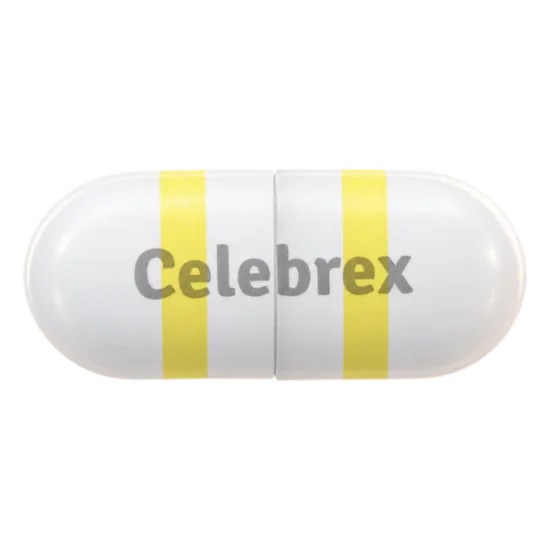
Celebrex
4 (5 customer reviews)Celecoxib, the active ingredient of Celebrex, is a selective non-steroidal anti-inflammatory medicine used for inflammatory pain. Celebrex capsules are prescribed for adults with osteoarthritis, rheumatoid arthritis, ankylosing spondylitis, short-term acute pain, or primary dysmenorrhoea.
Product information
Celebrex contains celecoxib and belongs to the non-steroidal anti-inflammatory drug (NSAID) class.
Ingredients
Celebrex contains celecoxib, a selective cyclooxygenase-2 inhibitor within the non-steroidal anti-inflammatory drug, or NSAID, class. It is supplied as oral capsules and is used when pain is linked to inflammation rather than muscle spasm or nerve damage. Celecoxib is designed to target COX-2 more strongly than COX-1, which explains both its benefits and its limits. [1]
Primary medical indications
Osteoarthritis involves gradual cartilage loss in joints such as the knees, hips, hands, and spine. Celebrex can reduce the inflammatory component of osteoarthritis pain, helping movement feel less restricted.
Rheumatoid arthritis is an autoimmune disease where the immune system attacks the joint lining. Celebrex relieves pain and stiffness but does not replace disease-modifying treatment used to slow joint damage.
Celebrex may also be prescribed for:
- Ankylosing spondylitis and other inflammatory spinal pain conditions
- Acute musculoskeletal or post-procedural pain
- Primary dysmenorrhoea, meaning painful menstrual cramps caused by uterine prostaglandins
- Flare-related inflammatory joint pain
Celebrex is not an opioid and it is not a corticosteroid.
Therapeutic indications
Celebrex capsules are prescribed for adults with osteoarthritis, rheumatoid arthritis, ankylosing spondylitis, short-term acute pain, or primary dysmenorrhoea.
Celebrex may also be prescribed for:
- Ankylosing spondylitis and other inflammatory spinal pain conditions
- Acute musculoskeletal or post-procedural pain
- Primary dysmenorrhoea, meaning painful menstrual cramps caused by uterine prostaglandins
- Flare-related inflammatory joint pain
Dosage and administration
The prescribed dose depends on the condition being treated, symptom severity, kidney and liver function, age, and other medicines. Dosing differs between strengths and between users, so there is no single amount that suits everyone.
- Swallow the capsule whole with water.
- Take it at the same time each day when it is prescribed for regular use.
- It may be taken with food or without food.
- Use the lowest prescribed dose for the shortest period that controls symptoms.
- If a dose is missed, take it when remembered unless the next scheduled dose is close. Do not double the dose.
Do not open, crush, or chew capsules unless a prescriber has given a specific alternative method. Altering a capsule can make administration less predictable and may be unsuitable for people with swallowing difficulties.
When not to use it
- Active stomach or intestinal ulceration, or gastrointestinal bleeding
- Severe heart failure, established coronary artery disease, stroke history, or uncontrolled hypertension
- Severe kidney impairment or significant dehydration
- Active serious liver disease
- Asthma triggered by aspirin or NSAIDs
- Inflammatory bowel disease, especially during an active flare
- A history of severe skin reactions to medicines
It should also be avoided around coronary artery bypass graft surgery.
When this is not for you
This is NOT for you if you have had an allergic reaction to celecoxib, a severe reaction to aspirin or another NSAID, or a serious sulfonamide allergy. Celebrex may also be unsuitable if you have serious heart, kidney, liver, stomach, bowel, or blood-pressure problems, aspirin-triggered asthma, or a history of severe skin reactions to medicines. Pregnancy planning also changes the risk-benefit decision.
Possible side effects
Many people tolerate Celebrex without major problems. The more frequent unwanted effects include indigestion, abdominal discomfort, diarrhoea, nausea, gas, headache, dizziness, cold-like symptoms, and ankle swelling. These effects can be more noticeable early in treatment or when the dose is increased.
Celecoxib can still irritate the gastrointestinal tract. Black stools, vomiting blood, persistent upper-abdominal pain, unusual weakness, or fainting can signal gastrointestinal bleeding and need urgent assessment. The risk rises with older age, a past ulcer, alcohol intake, corticosteroids, anticoagulants, antiplatelet medicines, or another NSAID. [3]
More serious reactions are uncommon but clinically significant. Seek urgent medical help for chest pain, sudden breathlessness, weakness on one side of the body, facial swelling, blistering rash, yellowing of the skin or eyes, or a marked fall in urine output.
How it affects the body
Celecoxib blocks cyclooxygenase-2, commonly called COX-2. This enzyme helps produce prostaglandins, chemical messengers involved in pain sensitivity, swelling, and fever during inflammation. With less prostaglandin production at inflamed tissue, pain signals and stiffness often decrease.
Traditional NSAIDs such as ibuprofen and naproxen inhibit both COX-1 and COX-2. COX-1 also helps protect the stomach lining and supports platelet function. Celecoxib largely spares COX-1 at usual therapeutic exposure, so it may cause fewer upper gastrointestinal ulcers than non-selective NSAIDs in some people, though stomach bleeding can still occur. [2]
The COX-2 selectivity does not remove cardiovascular risk. Like other NSAIDs, celecoxib can raise blood pressure, promote fluid retention, and increase the risk of serious cardiovascular events in susceptible patients.
Common mistakes
Several routine mistakes can make celecoxib less tolerable or less useful:
- Taking ibuprofen, naproxen, or diclofenac at the same time
- Using Celebrex for persistent pain without clarifying the cause
- Continuing it through vomiting, diarrhoea, or dehydration
- Ignoring black stools, breathlessness, or unusual swelling
- Assuming a previous tolerance means it remains suitable after a heart, kidney, or stomach diagnosis
- Taking a missed dose late and then taking the next dose too close together
Comparison
Celebrex is one option within the NSAID group. The best choice depends on the type of pain, ulcer history, cardiovascular profile, kidney function, and whether short-term or regular treatment is needed.
| Medicine | COX activity | Practical distinction |
|---|---|---|
| Celecoxib | More selective for COX-2 | May be preferred when upper-gut risk is a concern |
| Ibuprofen | Non-selective COX-1 and COX-2 inhibitor | Often used for short-term pain, with more COX-1 inhibition |
| Naproxen | Non-selective COX-1 and COX-2 inhibitor | Longer-lasting NSAID effect, still carries gut and kidney risks |
Celecoxib may be useful for someone with arthritis pain who needs an oral anti-inflammatory option but has previously struggled with dyspepsia on a non-selective NSAID. It is not automatically the preferred option for a person with prior heart attack, stroke, uncontrolled blood pressure, or severe kidney disease.
Paracetamol works through a different mechanism and does not provide the same anti-inflammatory action. It may be used for some pain conditions, though the treatment plan depends on the diagnosis and total daily medicine exposure.
What doctors say
In clinical practice, prescribers often see the best results when celecoxib is linked to a clear reason for use: inflammatory knee pain, an arthritis flare, spinal stiffness, or menstrual pain. It can relieve symptoms well, yet it does not repair worn cartilage or suppress the autoimmune process behind rheumatoid arthritis.
Doctors also watch for a false sense of security when a capsule seems gentler on the stomach. Selective COX-2 inhibition changes the gastrointestinal profile; it does not make bleeding, kidney injury, or cardiovascular effects impossible. Blood pressure, swelling, kidney function, and treatment duration matter more when Celebrex is used regularly.
Comparison
Common questions
Can Celebrex be taken with food or on an empty stomach?
Celebrex can be taken with or without food. Food may be useful if the capsule causes nausea, dyspepsia, or a heavy stomach feeling. A meal does not remove the risk of ulceration or bleeding, so people with a previous ulcer or bleeding history still need careful prescribing. The FDA prescribing information, revised in 2023, confirms that celecoxib capsules may be administered without regard to meals.
How soon does Celebrex become noticeable?
Some people notice reduced acute inflammatory pain on the first day, while arthritis stiffness may improve more gradually with regular use. The timing depends on the cause of pain, its severity, and whether inflammation is the main driver. WHO pain-management materials updated in 2023 stress that persistent pain should be reassessed when an anti-inflammatory approach does not produce meaningful functional improvement. Do not increase the prescribed dose to force faster relief.
What is the best time of day to take Celebrex?
The best time is the time that matches the prescribed schedule and can be followed consistently. People with morning arthritis stiffness may be directed to use it at a time that supports early-day function, while others may take it later for evening symptoms. If it causes stomach upset, taking it with a meal may be more comfortable. EMA product information current in 2024 supports regular administration according to the prescribed regimen rather than using irregular catch-up doses.
Can Celebrex raise blood pressure?
Yes, celecoxib can raise blood pressure or reduce the effect of some blood-pressure medicines. Fluid retention can also contribute to ankle swelling and shortness of breath in susceptible people. This risk matters most for people with hypertension, heart failure, kidney disease, or established cardiovascular disease. MOHAP medication-safety guidance published in 2025 supports blood-pressure review when NSAIDs are used by people with cardiovascular risk factors.
How long does a course of Celebrex last, and is long-term use acceptable?
Treatment length is determined by the condition and the balance between symptom control and adverse-effect risk. Short episodes of acute pain often need a limited course, while chronic inflammatory arthritis may require longer treatment with periodic review. Long-term use can be appropriate for selected patients, though cardiovascular, gastrointestinal, kidney, and blood-pressure risks need regular reassessment. NICE guidance from 2022 recommends using the lowest suitable NSAID exposure for the shortest necessary duration.
What happens if Celebrex is stopped, and does it need tapering?
Celebrex does not usually require dose tapering because it does not cause physical dependence.
Pain and stiffness can return if the underlying inflammatory condition remains active. Stopping may be appropriate after a short painful episode resolves, or when adverse effects occur. The FDA’s 2023 celecoxib information advises prompt clinical assessment if serious gastrointestinal, cardiovascular, allergic, kidney, or liver warning signs develop.
Can Celebrex be used during pregnancy or breastfeeding?
Celebrex should be avoided in pregnancy unless a specialist determines that the expected benefit outweighs the risk. NSAIDs can affect fetal kidney function and circulation, with greatest concern later in pregnancy. Breastfeeding decisions require individual assessment because celecoxib can pass into breast milk in small amounts. The UK National Library of Medicine’s LactMed review updated in 2025 advises weighing maternal need, infant age, and alternative treatments.
Do you offer anonymous delivery?
Your order will be securely packed and shipped within 24 hours. This is exactly what your package will look like (images of an actual item sent). It has the size and look of a regular private letter (24x11x0.7 cm) and its contents cannot be seen.
Sources
- European Medicines Agency (2024). Celecoxib: Summary of Product Characteristics.
- U.S. Food and Drug Administration (2023). CELEBREX (celecoxib) capsules: Prescribing Information.
- National Institute for Health and Care Excellence (2022). Osteoarthritis in over 16s: diagnosis and management.