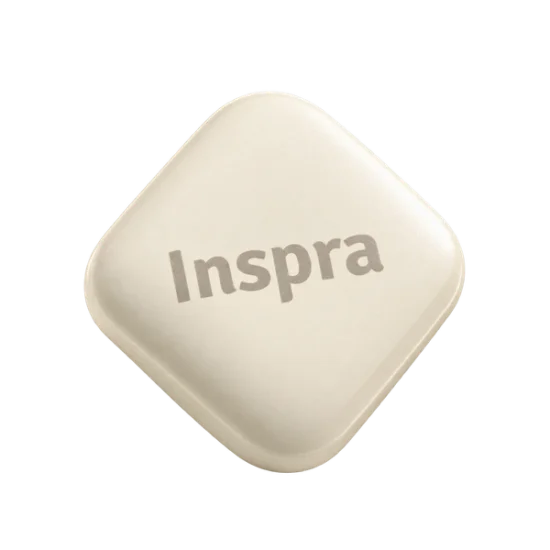
Inspra
4.5 (4 customer reviews)Heart failure and high blood pressure can worsen when aldosterone drives salt retention and cardiovascular strain. Inspra contains eplerenone, a selective mineralocorticoid receptor antagonist used for adults with heart failure after myocardial infarction and for hypertension. It reduces aldosterone signalling, helping the body retain less sodium and water.
Product information
Inspra tablets contain eplerenone. Eplerenone belongs to the mineralocorticoid receptor antagonist class, also called selective aldosterone blockers.
Ingredients
Aldosterone is a hormone produced by the adrenal glands. It tells the kidneys to retain sodium, and water follows sodium. In heart failure, this process can add to fluid congestion, raised blood pressure, and stress on the heart muscle.
Eplerenone is often selected when hormonal adverse effects from less selective aldosterone blockers would be a concern. Its receptor selectivity is a clinical advantage, yet potassium and kidney function still need close monitoring.
Therapeutic indications
It is used alongside other cardiovascular treatments for heart failure with reduced left-ventricular function after a heart attack and may also be prescribed for hypertension. [1]
The EPHESUS trial found that adding eplerenone to standard care after myocardial infarction in people with left-ventricular dysfunction and heart failure reduced mortality and cardiovascular hospital admissions. [2]
Dosage and administration
Inspra is supplied as oral tablets. The amount per intake is set individually for each person rather than being one fixed number. Prescribers consider the reason for treatment, kidney function, potassium concentration, blood pressure, and other medicines before deciding whether to start, continue, or adjust treatment.
Take the prescribed tablet once daily at a consistent time. It may be taken with or without food. Swallow it whole with water.
- Take the tablet at the same time each day to make missed doses less likely.
- If a dose is missed, take it when remembered unless the next dose is due soon.
- Do not take two tablets together to compensate for a missed dose.
- Do not change the daily amount after a single high blood-pressure reading or a day of ankle swelling.
- Attend scheduled potassium and kidney-function tests.
The European Medicines Agency advises monitoring serum potassium and renal function before eplerenone is started, shortly after treatment begins, and after relevant dose changes. [3]
When not to use it
Do not combine eplerenone with strong CYP3A4 inhibitors, including:
- itraconazole;
- ketoconazole;
- clarithromycin;
- ritonavir;
- nefazodone.
Other combinations need attention because they may raise potassium or affect kidney function:
- potassium supplements and potassium-containing salt substitutes;
- ACE inhibitors or angiotensin receptor blockers;
- trimethoprim-containing antibiotics;
- non-steroidal anti-inflammatory drugs such as ibuprofen or diclofenac;
- lithium.
The FDA prescribing information lists hyperkalaemia as the central treatment-limiting risk and identifies strong CYP3A4 inhibitors as contraindicated combinations. [4]
When this is not for you
This is NOT for you if you have high blood potassium, severe kidney impairment, severe liver impairment, or a known allergy to eplerenone. Strong CYP3A4 inhibitors such as itraconazole, ketoconazole, clarithromycin, ritonavir, and nefazodone should not be taken with eplerenone. Tell your prescriber about medicines and products that may raise potassium or affect kidney function, including potassium supplements, salt substitutes, ACE inhibitors, angiotensin receptor blockers, trimethoprim-containing antibiotics, non-steroidal anti-inflammatory drugs, and lithium.
Possible side effects
Most people tolerate Inspra without dramatic symptoms. Headache, dizziness, diarrhoea, fatigue, cough, and insomnia can occur. Lower blood pressure may cause light-headedness when standing quickly, especially during the early phase of treatment or when other blood-pressure medicines are used.
Hyperkalaemia is the most clinically significant adverse reaction. It may cause weakness, tingling, nausea, palpitations, or an irregular heartbeat, though some people feel nothing. This is why blood testing matters more than relying on symptoms alone.
Gynaecomastia, breast tenderness, and sexual side effects occur less often with eplerenone than with spironolactone because eplerenone has less activity at androgen and progesterone receptors. Angioedema is rare but serious. Swelling of the lips, tongue, face, or throat requires urgent medical care.
One practical point is often missed: dehydration from vomiting, diarrhoea, fever, or heavy sweating can change kidney function and potassium handling. A clinician may need to reassess medicines during a significant illness.

How it affects the body
Eplerenone competitively occupies mineralocorticoid receptors in the kidneys, heart, and blood vessels. Aldosterone cannot activate the receptor as strongly, so less sodium is retained and potassium loss is reduced. The result can be lower fluid load and less harmful remodelling of heart tissue over time.
Cardiac remodelling means structural changes in the heart after injury, including enlargement and stiffening. These changes can reduce pumping ability.
Common mistakes
- Taking potassium supplements without mentioning them during cardiovascular follow-up.
- Using a potassium-based salt substitute for blood pressure control while taking Inspra.
- Doubling a missed dose.
- Stopping the tablets after blood pressure improves without a prescriber-led plan.
- Assuming dizziness always means the tablet should be stopped, rather than checking blood pressure, hydration, and concurrent medicines.
- Starting St John’s wort for mood symptoms without recognising its interaction potential.
- Taking anti-inflammatory pain medicines regularly without considering kidney effects.
One missed tablet is rarely an emergency.
A double dose can be a problem.
Comparison
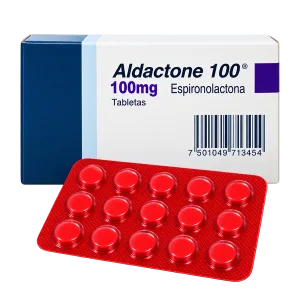
Inspra and spironolactone both block mineralocorticoid receptors. Both may be used in heart failure and resistant hypertension, while their receptor selectivity and hormonal effects differ.
| Feature | Eplerenone in Inspra | Spironolactone |
|---|---|---|
| Receptor activity | More selective mineralocorticoid receptor blockade | Mineralocorticoid receptor blockade with more androgen and progesterone receptor activity |
| Hormonal adverse effects | Lower likelihood of breast tenderness, gynaecomastia, and sexual adverse effects | Hormonal adverse effects occur more often |
| Shared clinical concern | Hyperkalaemia and reduced kidney function risk | Hyperkalaemia and reduced kidney function risk |
Spironolactone has a long history in heart failure care and is widely used. Eplerenone may suit people who develop endocrine adverse effects with spironolactone or who need a more selective option. Neither medicine removes the need for potassium monitoring.
A Cochrane review of mineralocorticoid receptor antagonists in heart failure found reductions in mortality and hospitalisation, balanced against a higher risk of hyperkalaemia. [5]
What doctors say
In cardiology practice, eplerenone is viewed as a treatment that protects the heart over time rather than one that produces an immediate sensation. Doctors commonly focus on three measures: blood pressure, kidney function, and serum potassium.
A patient may feel well and still need dose adjustment after a blood test. That is normal for this medicine. The aim is to keep aldosterone blockade strong enough to support heart failure treatment without allowing potassium to rise too far.
Comparison
Common questions
What should I discuss with my doctor before starting Inspra?
Discuss any history of kidney disease, liver disease, high potassium, diabetes, heart failure, and recent heart attack. Give a full list of prescription medicines, antibiotics, pain medicines, supplements, and salt substitutes. The FDA prescribing information, published in 2013, identifies potassium level, renal function, and CYP3A4-interacting medicines as major factors in treatment suitability. A baseline blood test helps identify risks before the first tablet is taken.
Can Inspra tablets be split, crushed, or chewed?
Inspra tablets should be swallowed whole unless a prescriber gives a specific alternative instruction. Crushing or chewing can make it harder to take the intended dose consistently and may be unsuitable for people who need precise daily treatment. The EMA product information for eplerenone, updated in 2024, describes oral tablet administration and supports routine swallowing with water. If swallowing tablets is difficult, the prescriber should decide on the appropriate approach rather than using an improvised method.
What is the best time of day to take Inspra?
The best time is the time you can maintain every day. Morning suits many people because it fits with other cardiovascular medicines, though evening can also be appropriate when prescribed. Eplerenone may be taken with or without food, according to the EMA product information updated in 2024. Avoid changing the timing repeatedly, since regular timing makes adherence and side-effect tracking easier.
How long does one Inspra dose keep working?
A once-daily regimen is used because eplerenone is designed to provide ongoing mineralocorticoid receptor blockade across the day. Its blood-pressure and heart-failure benefits build with regular treatment rather than from a single dose. The 2003 EPHESUS trial evaluated sustained treatment after myocardial infarction, not occasional use. Do not take an additional tablet for temporary swelling or a single raised reading.
Can I drive, concentrate, or work with machinery while taking Inspra?
Some people experience dizziness, fatigue, or reduced concentration, most often when blood pressure falls or when treatment is being adjusted. The FDA’s 2013 prescribing information reports dizziness among possible adverse reactions. Assess how you feel before driving, working at height, or operating machinery. New faintness, severe weakness, palpitations, or confusion needs prompt medical assessment.
What should I do if Inspra does not produce the expected result?
Continue the prescribed routine unless a clinician changes it, because eplerenone works as part of a wider heart-failure or blood-pressure plan. Record blood-pressure readings, symptoms such as swelling or breathlessness, and any new medicines started since the last review. The 2023 European Society of Cardiology heart-failure update supports guideline-directed combination treatment, with adjustment based on symptoms, blood pressure, kidney function, and potassium. Persistent breathlessness, rapid weight gain, chest pain, or fainting needs urgent evaluation.
Do you offer anonymous delivery?
Your order will be securely packed and shipped within 24 hours. This is exactly what your package will look like (images of an actual item sent). It has the size and look of a regular private letter (24x11x0.7 cm) and its contents cannot be seen.
Sources
- European Medicines Agency (2024). Inspra: EPAR product information.
- New England Journal of Medicine (2003). Eplerenone, a selective aldosterone blocker, in patients with left ventricular dysfunction after myocardial infarction.
- European Medicines Agency (2024). Eplerenone: Summary of Product Characteristics.
- U.S. Food and Drug Administration (2013). Inspra (eplerenone) prescribing information.
- Cochrane (2018). Aldosterone antagonists for heart failure with reduced ejection fraction.