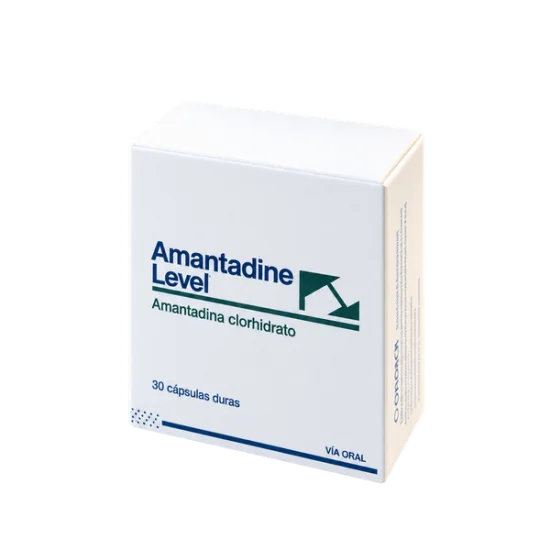
Amantadine
3.8 (3 customer reviews)Amantadine is an oral medicine for adults with Parkinson’s disease or medicine-induced movement symptoms. Its amantadine hydrochloride ingredient can help ease rigidity, tremor, slowed movement, and some levodopa-related involuntary movements by affecting dopamine and NMDA receptors.
Product information
Adults living with Parkinson’s disease or medicine-induced movement symptoms may be prescribed Amantadine, an oral adamantane containing amantadine hydrochloride. It can ease rigidity, tremor, slowness of movement, and some levodopa-related involuntary movements through dopamine and NMDA-receptor effects [1].
Ingredients
Amantadine contains amantadine hydrochloride as its active ingredient. It is an oral adamantane medicine used for Parkinson’s disease and medicine-induced extrapyramidal symptoms, with effects involving dopamine and NMDA receptors.
Therapeutic indications
Amantadine is used in neurology for Parkinson’s disease and for drug-induced extrapyramidal symptoms. Extrapyramidal symptoms are movement changes caused by medicines that affect dopamine signalling, such as stiffness, tremor, restlessness, slowed movement, or unusual muscle postures.
Management of Parkinson’s disease
In Parkinson’s disease, dopamine-producing cells gradually decline. Dopamine helps coordinate smooth, purposeful movement. Amantadine may be used alone during early symptom management or alongside levodopa-based treatment when symptoms remain troublesome.
Its role is often practical rather than dramatic. A person may find it easier to turn in bed, initiate walking, get dressed, or move more freely after sitting. The response differs between individuals, and benefit may be clearer for stiffness and reduced movement speed than for severe resting tremor.
Relief of extrapyramidal symptoms
Drug-induced extrapyramidal symptoms can occur with some antipsychotic medicines and other dopamine-blocking treatments. Amantadine can reduce rigidity, tremor, and slowed movement without using a strongly anticholinergic mechanism.
This can make it a useful option when dry mouth, constipation, blurred vision, or memory effects make anticholinergic medicines unsuitable. Confusion and dizziness remain possible with Amantadine, especially in older adults or people with reduced kidney function.
Amantadine also has antiviral activity against Influenza A. WHO guidance does not recommend adamantane antivirals for seasonal influenza treatment because resistance among circulating influenza A viruses is widespread [2].

Dosage and administration
Amantadine pills are taken by mouth. The amount used and how often it is taken depend on the reason for treatment and are agreed with a doctor or pharmacist. Kidney function, age, other Parkinson’s medicines, and prior side effects all influence the chosen regimen.
- Take the prescribed dose at consistent times each day.
- Swallow pills with water rather than crushing them.
- If a dose is missed, take it when remembered unless the next planned dose is close; skip the missed dose in that case.
- Do not take two doses together to compensate for a missed one.
- Do not stop Amantadine suddenly unless a clinician directs it, since abrupt withdrawal can worsen Parkinsonian symptoms or trigger confusion.
Sleep disruption can occur.
One detail people sometimes miss is the effect of kidney clearance. Amantadine leaves the body mainly through the kidneys. Reduced renal function can allow the medicine to accumulate, increasing the chance of confusion, hallucinations, leg swelling, or unsteadiness. Clinicians may therefore adjust the regimen when kidney function declines. Older adults may need closer monitoring for neurological changes and balance problems. Prompt review is appropriate when these effects appear after an illness or medication change.
When not to use it
- History of seizures or epilepsy, because it may lower the seizure threshold.
- Closed-angle glaucoma, as anticholinergic-like effects may worsen eye pressure.
- Decompensated heart failure or significant peripheral oedema.
- Previous psychosis, hallucinations, severe depression, or suicidal thoughts.
- Pregnancy or breastfeeding, where the anticipated benefit needs individual medical assessment.
- A history of severe skin reactions to amantadine hydrochloride.
Alcohol can intensify dizziness, impaired concentration, and poor balance. Other medicines that affect the central nervous system, including sedatives, antipsychotics, anticholinergics, and some antidepressants, may increase confusion or drowsiness. Diuretics can also alter Amantadine handling in the body, so a complete medicine list is relevant before treatment begins.
EMA safety information for medicines affecting the nervous system consistently emphasises individual assessment of renal function, neuropsychiatric history, and interacting medicines before treatment changes [4].
When this is not for you
This is NOT for you if you have end-stage or severe renal failure without a clinician’s specific treatment plan. The kidneys clear Amantadine, and poor clearance can raise blood levels to an unsafe range.
Possible side effects
Amantadine is often tolerated when treatment is tailored to the individual, yet it is not free of trade-offs. Nausea, dizziness, dry mouth, constipation, reduced appetite, insomnia, and nervousness can occur. Some people develop livedo reticularis, a net-like bluish or purplish mottling of the skin, most often on the legs.
| Reaction type | What it may feel like |
|---|---|
| Digestive effects | Nausea, reduced appetite, dry mouth, constipation |
| Nervous system effects | Dizziness, insomnia, headache, nervousness, difficulty concentrating |
| Skin and circulation effects | Ankle swelling or livedo reticularis with mottled skin colouring |
Older adults can be more sensitive to confusion, hallucinations, agitation, and falls. These effects can be mistaken for worsening Parkinson’s disease, which is why a clear timeline matters. If symptoms began shortly after starting Amantadine or after a change in kidney function, the medicine should be considered as a possible contributor.
Serious reactions need urgent assessment. These include fainting, a seizure, severe confusion, new hallucinations, suicidal thoughts, a high fever with severe muscle stiffness, or sudden impulse-control changes such as compulsive gambling or spending. MedlinePlus also warns about unusual urges and significant behavioural changes during amantadine treatment [3].
How it affects the body
Amantadine belongs to the adamantanes drug class. Its active substance is amantadine hydrochloride. It has several actions in the central nervous system, which explains both its benefit in movement disorders and its potential neurological side effects.
The medicine promotes dopamine release and may reduce dopamine reuptake in certain brain pathways. Dopamine is a neurotransmitter, a chemical messenger that helps the brain plan and regulate movement. Amantadine also blocks NMDA receptors, which are receptors activated by glutamate, another major brain messenger.
NMDA receptor blockade is relevant for dyskinesia. Excessive glutamate activity may contribute to the involuntary movements that can develop during long-term levodopa treatment. By moderating this pathway, Amantadine may reduce dyskinesia without replacing levodopa.
Dopamine agonists act differently. They directly stimulate dopamine receptors, while Amantadine modifies dopamine release and glutamate signalling. This broader action can be useful, though it also means that sleep disturbance, hallucinations, and dizziness need attention.
Common mistakes
- Stopping the pills suddenly after feeling better or after a mild side effect.
- Taking a missed dose late in the day, then developing insomnia.
- Assuming new confusion or visual hallucinations are simply Parkinson’s disease progressing.
- Adding sedating cold remedies or antihistamines without reviewing the combined effect on alertness.
- Ignoring dehydration, vomiting, or a decline in kidney function during an illness.
- Expecting Amantadine to produce the same degree of improvement as levodopa/carbidopa for every motor symptom.
Comparison
Amantadine may be used as part of a broader Parkinson’s disease plan. It is not a replacement for every other antiparkinsonian medicine. The best option depends on whether the main issue is early motor symptoms, wearing-off between levodopa doses, dyskinesia, tremor, or medicine-induced Parkinsonism.
| Treatment approach | Main clinical role |
|---|---|
| Amantadine | Dopamine and NMDA modulation; may help rigidity, bradykinesia, dyskinesia, and drug-induced extrapyramidal symptoms |
| Levodopa/carbidopa | Replaces dopamine activity more directly; often provides stronger relief of core Parkinson’s motor symptoms |
| Dopamine agonists or anticholinergics | Dopamine agonists stimulate dopamine receptors; anticholinergics may help tremor but can impair memory and cause constipation |
Levodopa/carbidopa is often the most potent treatment for slowness and rigidity. Its limitation is that long-term treatment can be associated with motor fluctuations and dyskinesia. Amantadine may be added when dyskinesia becomes disruptive.
Benztropine and trihexyphenidyl are anticholinergic medicines used for selected tremor or drug-induced movement symptoms. They can cause constipation, urinary retention, blurred vision, and cognitive problems. Diphenhydramine also has anticholinergic effects and can add to drowsiness or confusion.
Pramipexole is a dopamine agonist. It can help motor symptoms but may cause sleep attacks, ankle swelling, hallucinations, and impulse-control problems. Amantadine has a different mechanism and is often considered when dyskinesia or medicine-induced Parkinsonism is central to the clinical picture.
What doctors say
In clinical practice, prescribers tend to look for a measurable target before adding Amantadine. That target may be painful stiffness, slow movement, troublesome dyskinesia, or antipsychotic-related Parkinsonism. Vague goals make it hard to decide whether the treatment is helping.
Doctors also pay close attention to cognition and renal function. An older person with reduced kidney clearance may benefit from a more cautious regimen than a younger person with normal renal function. New hallucinations are never a symptom to dismiss as part of aging.
Comparison
Common questions
Can Amantadine be combined with other Parkinson’s medicines?
Amantadine is often used with levodopa/carbidopa or other Parkinson’s treatments when a clinician identifies a clear reason for combination therapy. The combination may improve motor control or help reduce dyskinesia, though dizziness, hallucinations, and low blood pressure can become more likely when several nervous-system medicines are used together. FDA prescribing information from 2018 describes Amantadine as an option for Parkinsonian syndromes and drug-induced extrapyramidal reactions.
What should be discussed before starting Amantadine?
Discuss kidney disease, heart failure, glaucoma, seizures, mood disorders, hallucinations, sleep problems, and any history of compulsive behaviour. A clinician also needs to know about diuretics, sedatives, antipsychotics, antihistamines, and medicines for depression or anxiety. NICE guidance from 2017 supports medication review when medicines can affect alertness, balance, and mental state.
How does Amantadine differ from levodopa/carbidopa?
Levodopa is converted into dopamine in the brain, while carbidopa helps more levodopa reach the brain. Amantadine does not replace dopamine directly; it changes dopamine release and blocks NMDA receptors. NICE guidance published in 2017 places treatment choice within the person’s symptoms, function, adverse-effect risk, and treatment goals .
How long can an Amantadine course last?
Treatment duration depends on the condition being managed and the balance between benefit and tolerability. Some people use Amantadine for continuing Parkinson’s symptom control or dyskinesia management, with regular reviews of kidney function, cognition, sleep, and mental health. WHO guidance published in 2010 does not support its use for seasonal Influenza A because resistance limits its antiviral role.
Does severe kidney disease rule out Amantadine?
Severe renal failure can rule out standard Amantadine treatment because the medicine is cleared through the kidneys. Accumulation can lead to marked confusion, hallucinations, agitation, and other toxic effects. MedlinePlus information updated in 2024 advises patients to report kidney disease before using amantadine .
Do you offer anonymous delivery?
Your order will be securely packed and shipped within 24 hours. This is exactly what your package will look like (images of an actual item sent). It has the size and look of a regular private letter (24x11x0.7 cm) and its contents cannot be seen.
Sources
- FDA (2018). Symmetrel (amantadine hydrochloride) prescribing information.
- WHO (2010). Guidelines for pharmacological management of pandemic (H1N1) 2009 and other influenza viruses
- MedlinePlus (2024). Amantadine.
- EMA (2023). Guideline on good pharmacovigilance practices: product- or population-specific considerations.