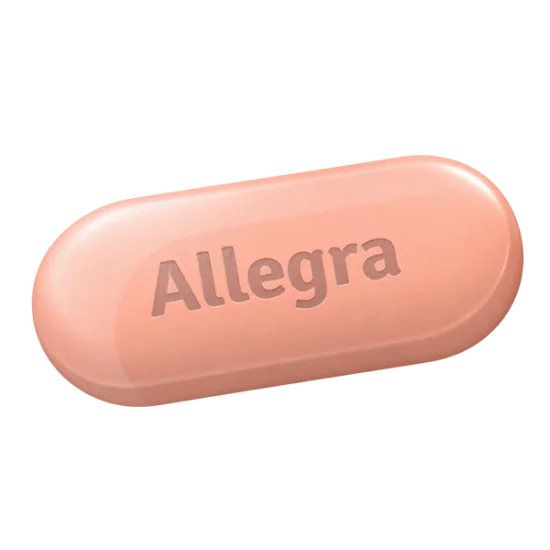
Allegra tablets are taken by mouth with water to relieve allergy symptoms such as sneezing, a runny nose, itchy or watery eyes, and hives. Fexofenadine helps reduce these symptoms by blocking peripheral histamine receptors, with less sleepiness than older antihistamines for many people.
Product information
They contain fexofenadine hydrochloride, a second-generation antihistamine that blocks peripheral H1 histamine receptors while causing less sleepiness than older antihistamines for many people.
Ingredients
Allegra contains fexofenadine hydrochloride, a selective peripheral H1-antihistamine. It is used for seasonal allergic rhinitis and chronic idiopathic urticaria, the medical term for recurring hives without an identified trigger. The FDA describes fexofenadine as an antihistamine for allergy-related nasal and eye symptoms, as well as itching and wheals associated with hives [1].
Histamine is a natural signalling chemical released during an allergic reaction. Once it binds to H1 receptors, it can trigger nasal irritation, mucus production, itching, tears, and raised itchy skin patches.
Therapeutic indications
Common symptoms that may respond to Allegra include:
Sneezing and nasal itching
Runny nose
Itchy, red, or watery eyes
Itching of the nose or throat
Itchy hives and skin wheals
Seasonal symptoms linked with pollen, dust, pet dander, or mould
Allegra is intended for allergy symptoms, not for treating a severe allergic reaction with breathing difficulty or facial swelling.
Fruit juices can reduce fexofenadine absorption. Take Allegra with plain water rather than apple, orange, or grapefruit juice.
Dosage and administration
Take Allegra tablets by mouth with water. The dose is decided individually, taking age, other medicines and health conditions into account. Use it at a consistent time when daily allergy control is needed, rather than alternating doses based only on how severe symptoms feel that morning.
Do not crush or chew tablets unless a prescriber has specifically selected a formulation that permits it. Altering a tablet can make it harder to take the intended dose correctly.
If a dose is missed, take the next planned dose at the usual time. Do not double the amount to compensate for a missed tablet.
Common administration mistakes include:
Taking Allegra with fruit juice instead of water
Combining it with another oral antihistamine without clinical advice
Using it to manage sudden wheezing or anaphylaxis
Taking antacids containing aluminium or magnesium at the same time
Assuming that a non-drowsy antihistamine can never affect alertness
Separate Allegra from aluminium- or magnesium-containing antacids by at least two hours. These products can bind fexofenadine in the gut and reduce absorption.
When not to use it
Extra care is needed in the following situations:
Kidney impairment, because clearance of fexofenadine can be reduced
Use of aluminium- or magnesium-containing antacids
Use of erythromycin or ketoconazole, which may raise fexofenadine exposure
Regular alcohol intake if it adds to tiredness or reduced concentration
Pregnancy or breastfeeding, where treatment should be selected individually
Children and adolescents, whose dose and suitability depend on age and clinical assessment
When this is not for you
Allegra is not for you if you have had an allergic reaction to fexofenadine or any tablet ingredient.
Do not combine several antihistamines merely because symptoms persist. This may increase unwanted effects without addressing the real reason for poor control, such as ongoing allergen exposure, nasal inflammation, or an incorrect diagnosis.
Tell the clinician about kidney disease before starting Allegra. This is easy to overlook because allergy medicines are often viewed as simple seasonal treatments.
Possible side effects
Most people tolerate Allegra well. Headache, nausea, dizziness, tiredness, dry mouth, and indigestion may occur. Sleepiness is less common than with older antihistamines, yet individual response varies.
Stop taking Allegra and seek urgent medical care for symptoms of a serious allergic reaction, including swelling of the lips, tongue, or throat; breathing difficulty; severe dizziness; or widespread blistering rash. These symptoms need medical assessment because they may signal a serious reaction rather than routine allergy symptoms.
People sometimes blame Allegra when seasonal allergy itself is causing fatigue, poor sleep, or sinus pressure. Keeping a brief symptom record can clarify whether tiredness began after the tablets or was present before treatment.
Try the first dose on a day when you do not need to drive or operate machinery. This gives you a realistic sense of how your own body responds.
How it affects the body
Fexofenadine works outside the brain and spinal cord, where it blocks H1 receptors on tissues affected by histamine. This reduces the allergy signal before it produces persistent itching, watery eyes, sneezing, or a runny nose.
Second-generation antihistamines were developed to limit entry into the central nervous system. For this reason, Allegra is less likely to cause sedation than first-generation medicines such as diphenhydramine, though tiredness can still occur in some individuals. The National Institute for Health and Care Excellence includes antihistamines among treatment options for allergic rhinitis [2].
Common mistakes
One frequent mistake is taking Allegra with breakfast juice. Apple, orange, and grapefruit juice can reduce the amount of fexofenadine absorbed, so the tablet may seem less helpful even though the medicine itself is appropriate.
Another is taking an antacid immediately before or after the tablet. Aluminium and magnesium can interfere with absorption in the digestive tract.
Some people use an antihistamine only after symptoms are intense. For predictable pollen allergy, symptom control is often steadier when treatment follows an individual plan during the exposure period.
Comparison
Several antihistamines treat similar allergy symptoms, yet their sedation profile and practical use differ. Allegra is often chosen when daytime alertness matters, while other options may suit a person whose symptoms, medical history, or response pattern is different.
Active ingredient
Drug class and sedation profile
Typical clinical role
Fexofenadine
Second-generation H1-antihistamine; low likelihood of drowsiness
Daytime allergic rhinitis and hives
Cetirizine
Second-generation H1-antihistamine; drowsiness occurs in some people
Allergy symptoms and itching when sedation is acceptable
Diphenhydramine
First-generation H1-antihistamine; sedation is common
Short-term allergy relief where drowsiness is not a concern
Cetirizine can provide strong itch relief for some people, though sleepiness is more frequent than with fexofenadine. Diphenhydramine crosses into the brain more readily and can impair driving, concentration, and reaction time.
Doctors do not select an antihistamine only by speed. Work demands, driving, kidney function, coexisting conditions, and other medicines can change the best choice. WHO guidance on medication safety also stresses that medicine-related impairment can affect daily activities even when a medicine is commonly used [3].
What doctors say
In clinical practice, physicians often see people change antihistamines too quickly after one difficult allergy day. Fexofenadine works best when the medicine matches the symptom pattern and is taken consistently during the relevant allergy period.
A clinician will also ask whether symptoms are limited to the nose and eyes or include chest tightness, wheeze, fever, facial pain, or thick coloured nasal discharge. Those features can point beyond uncomplicated allergic rhinitis. For chronic hives, doctors look for the pattern of itching, swelling, triggers, and any associated breathing symptoms; international urticaria guidance supports regular use of second-generation H1-antihistamines as a first-line approach [4].
The main advantage of Allegra is its low-sedation profile for many users. Its limitation is that it may not fully control prominent nasal congestion, and it cannot replace emergency treatment for severe allergic reactions.
Use in children and teenagers depends on age, symptoms, medical history, and the formulation selected by a clinician. Children should not receive an adult tablet dose simply because their allergy symptoms look similar to an adult’s symptoms. The FDA includes age-specific directions for fexofenadine-containing products, and those directions differ by formulation and indication. A paediatric clinician can also assess whether recurring symptoms are allergy, asthma, eczema, infection, or another condition. The FDA's 2023 consumer information gives formulation-specific age directions for fexofenadine products.
Can Allegra be combined with antacids?
Antacids containing aluminium or magnesium require timing separation from Allegra because they can reduce fexofenadine absorption. Keep at least a two-hour gap between the antacid and Allegra tablet. This interaction is described in fexofenadine prescribing information and is a common reason for weaker-than-expected symptom relief. Calcium-only antacids do not have the same well-established interaction, yet a clinician should still review regular medicines. The FDA's 2023 fexofenadine labeling describes the aluminium and magnesium antacid interaction.
Can Allegra be used during pregnancy or breastfeeding?
Pregnancy and breastfeeding require an individual decision that balances the severity of allergy symptoms with the available safety information. Fexofenadine may be considered only when the expected benefit justifies potential risk, and the choice can differ depending on pregnancy stage and other health conditions. The EMA advises that medicine use in pregnancy should be assessed case by case rather than assumed to be harmless because a product is used for allergies. Breastfeeding decisions should also consider the infant’s age and health. NICE guidance updated in 2024 recommends individual assessment of medicines used during pregnancy.
Which symptoms mean Allegra should be stopped and urgent medical care sought?
Stop Allegra and seek urgent medical help for breathing difficulty, wheezing, throat tightness, swelling of the face or tongue, fainting, or a rapidly spreading blistering rash. These signs may represent a serious allergic reaction or another urgent condition. Severe chest symptoms should never be managed by taking extra antihistamine tablets. WHO emergency-care guidance identifies breathing problems and facial or throat swelling as warning signs needing immediate assessment [5]. WHO's 2018 Basic Emergency Care guidance supports urgent assessment of severe breathing problems.
Do you offer anonymous delivery?
Your order will be securely packed and shipped within 24 hours. This is exactly what your package will look like (images of an actual item sent). It has the size and look of a regular private letter (24x11x0.7 cm) and its contents cannot be seen.
Sources
U.S. Food and Drug Administration (2023). Allegra Allergy Drug Facts.
National Institute for Health and Care Excellence (2024). Allergic rhinitis: Clinical Knowledge Summary.
World Health Organization (2017). Medication Without Harm: Global Patient Safety Challenge.
EAACI, GA²LEN, EuroGuiDerm and APAAACI (2022). The international EAACI/GA²LEN/EuroGuiDerm/APAAACI guideline for the definition, classification, diagnosis, and management of urticaria.
World Health Organization (2018). Basic emergency care: approach to the acutely ill and injured.
Reviews: Allegra
V
Vikram, 56
Mussafah
Verified
Rating: 5 out of 5
I used Allegra during the dusty weeks when my sneezing and itchy eyes usually made office days difficult. After a few days, the constant nose irritation settled and I could get through meetings without repeatedly reaching for tissues.
10 Nov 2026
L
Layla, 36
Bur Dubai
Verified
Rating: 3.5 out of 5
I took Allegra for pollen-related eye itching and it helped by the second day. I felt mildly tired on the first evening, although that passed, and it did less for my blocked nose than it did for sneezing.
12 Oct 2026
T
Tariq, 64
Mirdif
Verified
Rating: 4 out of 5
I had recurring hives on my arms and neck that were most distracting at night. Allegra reduced the itching enough that I stopped waking to scratch, and I was satisfied with the steadier control.