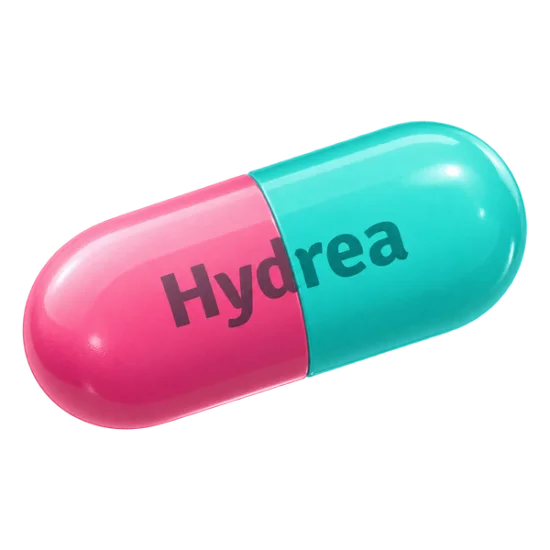
Hydrea
3.8 (5 customer reviews)Adults and children with sickle-cell disease or selected myeloproliferative blood disorders may be prescribed Hydrea capsules. Hydrea contains hydroxyurea, an antimetabolite that slows abnormal bone-marrow cell production and can increase fetal haemoglobin, helping reduce vaso-occlusive crises.
Product information
Hydrea capsules contain hydroxyurea, a cytotoxic antimetabolite used in haematology and oncology. Antimetabolites interfere with processes that rapidly dividing cells need to make genetic material. In Hydrea, hydroxyurea inhibits ribonucleoside diphosphate reductase, an enzyme required for producing DNA building blocks.
Ingredients
Hydroxyurea is the active ingredient in Hydrea. It belongs to the antimetabolite class and is also described as a cytoreductive medicine because it reduces excessive cell production.
The FDA prescribing information describes hydroxyurea as a medicine that can suppress bone-marrow activity, which explains both its clinical role and the need for scheduled full blood counts during treatment [1].
Therapeutic indications
Hydroxyurea raises fetal haemoglobin levels. Fetal haemoglobin remains more soluble than sickle haemoglobin and reduces red-cell sickling. The effect develops gradually because the medicine changes the characteristics of newly produced blood cells rather than treating pain immediately.
The National Heart, Lung, and Blood Institute identifies hydroxyurea as a disease-modifying treatment for people with sickle-cell disease who have recurrent pain episodes or acute chest syndrome [2].
Hydrea is also used to control excess blood-cell production in selected myeloproliferative disorders. These are conditions in which the bone marrow produces too many red cells, white cells, platelets, or a combination of these cells.
Polycythemia vera is one example. The condition can increase blood viscosity and raise the risk of clotting. Hydroxyurea can reduce elevated blood counts when cytoreduction is clinically appropriate. European LeukemiaNet guidance includes hydroxyurea among established cytoreductive options for polycythemia vera [3].
Hypereosinophilic syndrome may also require cytoreductive treatment when eosinophils are persistently elevated and contribute to organ injury. Hydrea may be considered within specialist-led treatment plans, with the goal of reducing harmful eosinophil production.
Hydroxyurea was explored historically in adjunct protocols related to AIDS because of its effects on cellular nucleotide pathways and viral replication. It is not a routine treatment for AIDS in modern antiretroviral care. Current HIV treatment depends on combination antiretroviral therapy selected by an infectious-disease specialist.

Dosage and administration
Hydrea is taken orally as capsules. The dose is decided individually, taking age, other medicines, body size, kidney function, blood counts, and health conditions into account.
Use follows a specialist-led plan:
- take the prescribed dose at the scheduled time;
- swallow capsules whole with water;
- use the same daily routine unless the prescriber changes it;
- attend scheduled blood tests before dose adjustments;
- keep capsules away from children and from anyone who is not prescribed the medicine.
If a dose is missed, take it when remembered unless the next scheduled dose is close. In that situation, skip the missed dose and continue with the regular schedule. Do not take two doses together.
Hydroxyurea may need a lower dose or less frequent use when kidney function is reduced. A common mistake is assuming that a stable dose remains suitable indefinitely. Blood counts, illness, dehydration, kidney changes, and added medicines can all alter tolerability.
When not to use it
- markedly low neutrophil, platelet, or red-cell counts;
- severe anaemia requiring assessment before treatment;
- significant kidney impairment;
- active serious infection;
- extensive skin ulcers linked to prior hydroxyurea exposure;
- pregnancy, unless a specialist judges treatment necessary;
- breastfeeding.
Avoid live vaccines during treatment unless the treating team specifically advises otherwise. Hydroxyurea can alter immune-cell responses, and live vaccines may create a greater risk of infection in immunosuppressed people.
Other medicines that suppress the bone marrow can increase the risk of low blood counts. This includes some chemotherapy medicines, interferons, immunosuppressants, and certain antiviral treatments. The European Medicines Agency advises that cytotoxic medicines require careful consideration of additive marrow toxicity and reproductive risks [5].
When this is not for you
This medication is not for you if you have a known hypersensitivity to hydroxyurea or have severe bone-marrow suppression that has not been assessed and managed by the prescribing team.
Possible side effects
The most clinically significant adverse effect of Hydrea is bone-marrow suppression. This may reduce white blood cells, platelets, or red blood cells. Low white-cell counts can increase infection risk, while low platelets may lead to unusual bruising, pinpoint red spots, nosebleeds, or bleeding gums.
Common or reported effects can include:
- nausea, reduced appetite, diarrhoea, or constipation;
- mouth sores;
- tiredness;
- skin or nail darkening;
- rash or dry skin;
- hair thinning;
- elevated uric acid in some people;
- reduced sperm production or menstrual changes.
Fever during treatment deserves attention because infection can become serious if white blood cell levels are low. Mouth ulcers, persistent sore throat, unexplained bruising, black stools, or blood in urine also require prompt clinical assessment.
Long-term use can be associated with skin changes, leg ulcers, and a higher need for skin surveillance. Sun sensitivity can be troublesome for some people in the UAE climate.
How it affects the body
This action slows DNA synthesis during cell division. In myeloproliferative disorders, it helps reduce the excessive production of blood cells by the bone marrow. In sickle-cell disease, its benefit is different: hydroxyurea promotes production of fetal haemoglobin, often abbreviated HbF, which makes red blood cells less likely to adopt the rigid sickle shape.
Common mistakes
Several avoidable problems can undermine treatment or delay recognition of toxicity.
- Skipping blood tests because the person feels well.
- Taking an extra capsule after a missed dose.
- Stopping Hydrea during a mild illness without discussing the change with the treating team.
- Ignoring a fever, mouth ulcers, new bruising, or persistent sore throat.
- Using pregnancy prevention inconsistently despite the reproductive risks of hydroxyurea.
- Sharing capsules with another person who has a similar blood condition.
- Assuming pain relief from Hydrea should occur on the same day.
One subtle issue is that blood tests may need to be repeated more often after a dose change, infection, or change in kidney function. The purpose is to find marrow suppression early, before it becomes symptomatic.
Comparison
Hydrea is chosen for its ability to alter bone-marrow production and, in sickle-cell disease, increase fetal haemoglobin. Alternative approaches have different targets and are not interchangeable without a specialist assessment.
| Treatment approach | Main role | Key limitation |
|---|---|---|
| Hydroxyurea | Cytoreduction and increased fetal haemoglobin production | Requires regular blood-count monitoring |
| Blood transfusion programmes | Rapid correction of severe anaemia or stroke prevention in selected sickle-cell cases | Can lead to iron overload and alloimmunisation |
| Therapeutic phlebotomy | Reduces red-cell mass in polycythemia vera | Does not always control elevated platelets or white cells |
For recurrent sickle-cell pain, hydroxyurea works as a preventive treatment rather than an acute pain reliever. For polycythemia vera, phlebotomy may control haematocrit, while Hydrea may be added when broader control of blood-cell production is required.
WHO information on sickle-cell disease describes the condition as a lifelong genetic blood disorder requiring prevention of complications as well as prompt treatment of acute events [4].
What doctors say
In haematology practice, clinicians focus less on a single laboratory result and more on patterns over several visits. A falling crisis rate in sickle-cell disease, fewer admissions, improved fetal haemoglobin, and stable blood counts can show that Hydrea is providing useful disease control.
For polycythemia vera or hypereosinophilic syndrome, the aim is controlled blood-cell production without pushing counts too low. Dose changes are often based on laboratory trends rather than symptoms alone.
Hydrea does not produce the same result for every person. Some people notice fewer sickle-cell crises after several months, while others need a revised plan because their blood counts limit the dose that can be maintained.
Comparison
Common questions
Is severe bone-marrow suppression a reason not to use Hydrea?
Yes. Severe suppression of white blood cells, platelets, or red blood cells can rule out starting or continuing Hydrea until the cause and severity have been assessed. The 2023 FDA prescribing information describes myelosuppression as the major dose-limiting toxicity of hydroxyurea. Blood counts are checked before treatment and repeatedly during therapy. A specialist may pause treatment or alter the dose if counts fall too far.
How soon can Hydrea become noticeable?
Hydrea does not work like a painkiller, so it does not stop a sickle-cell crisis immediately. Changes in blood counts can appear earlier, while fewer crises may become apparent only after sustained treatment over several months. The 2014 National Heart, Lung, and Blood Institute report describes hydroxyurea as a long-term disease-modifying therapy. Consistency and laboratory monitoring are central to judging response.
Can Hydrea be used during pregnancy or breastfeeding?
Hydroxyurea can harm a developing fetus because it interferes with DNA synthesis. The 2023 FDA prescribing information advises effective contraception for people who can become pregnant and highlights potential reproductive risks for both women and men. Pregnancy planning should be discussed before treatment changes are made. Breastfeeding is generally avoided because hydroxyurea may pass into breast milk.
Does Hydrea cause hair loss?
Hair thinning can occur with Hydrea, though complete hair loss is less typical than with some intensive chemotherapy regimens. Skin and nail pigmentation changes may be more noticeable than hair changes during long-term treatment. The 2018 EMA safety information for hydroxycarbamide includes hair loss among reported adverse effects. New or rapid hair loss should be discussed during follow-up, especially if it occurs with fatigue or other signs of low blood counts.
How long does a Hydrea course last, and is long-term treatment acceptable?
The treatment duration depends on the condition and the person’s response. Hydrea may be used long term for sickle-cell disease or myeloproliferative disorders when benefits continue to outweigh adverse effects and monitoring remains satisfactory. WHO materials published in 2023 describe sickle-cell disease as a lifelong condition that often requires ongoing disease-modifying management. Long-term therapy still requires periodic review of blood counts, skin changes, kidney function, and reproductive plans.
What happens if Hydrea is stopped, and does it need tapering?
Hydrea does not usually require tapering in the way corticosteroids do. A prescriber may stop or pause it promptly when blood counts are too low, serious infection occurs, pregnancy is identified, or another clinically significant adverse effect develops. Stopping can allow the underlying condition to become less controlled over time, including a return of higher blood counts or more sickle-cell complications. The 2023 FDA prescribing information recommends treatment decisions based on clinical status and laboratory monitoring rather than self-directed stopping.
Do you offer anonymous delivery?
Your order will be securely packed and shipped within 24 hours. This is exactly what your package will look like (images of an actual item sent). It has the size and look of a regular private letter (24x11x0.7 cm) and its contents cannot be seen.
Sources
- U.S. Food and Drug Administration (2023). HYDREA (hydroxyurea) prescribing information.
- National Heart, Lung, and Blood Institute (2014). Evidence-Based Management of Sickle Cell Disease: Expert Panel Report.
- European LeukemiaNet (2021). 2021 update on management recommendations in polycythemia vera.
- World Health Organization (2023). Sickle-cell disease.
- European Medicines Agency (2018). Siklos: EPAR product information (SmPC/PIL).