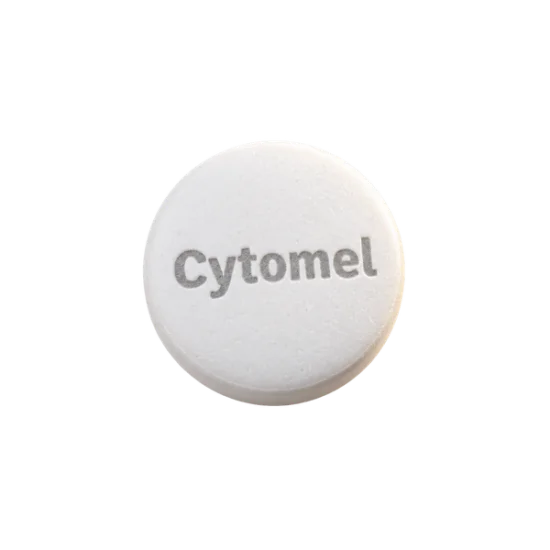
Cytomel
3.7 (3 customer reviews)Cytomel tablets may be prescribed for adults with confirmed hypothyroidism or selected cases of thyroid hormone deficiency. Its active ingredient, liothyronine, supplies T3 directly to support energy metabolism, temperature regulation, heart function, and other thyroid-dependent processes.
Product information
Adults with confirmed hypothyroidism or selected cases of thyroid hormone deficiency may be prescribed Cytomel tablets. Cytomel contains liothyronine, a synthetic form of the active thyroid hormone T3 that supports normal energy metabolism, temperature regulation, heart function, and other thyroid-dependent processes.
Ingredients
Cytomel contains liothyronine sodium, a synthetic version of triiodothyronine (T3). It belongs to the thyroid hormone class and is used when thyroid hormone replacement is clinically indicated.
T3 is the hormone that acts directly inside cells. The thyroid gland normally produces mostly thyroxine (T4), which body tissues then convert into T3. Cytomel provides T3 directly, so its effects may emerge and change faster than those of T4-based replacement therapy. The FDA prescribing information describes liothyronine as a potent thyroid hormone with a narrow margin between insufficient and excessive replacement. [1]
Therapeutic indications
Cytomel tablets may be prescribed for adults with confirmed hypothyroidism or selected cases of thyroid hormone deficiency. The active ingredient, liothyronine, supplies synthetic T3 to support energy metabolism, temperature regulation, heart function, and other thyroid-dependent processes.
Dosage and administration
The regimen for the chosen strength is confirmed with a healthcare professional before starting. Cytomel tablets are taken orally, usually as part of a regular daily thyroid-hormone routine.
- Take the prescribed dose at a consistent time each day.
- Swallow the tablet with water.
- Keep the timing consistent in relation to meals.
- Separate Cytomel from iron, calcium, aluminium-containing antacids, and bile-acid sequestrants when advised, as these can interfere with thyroid-hormone absorption.
- Use thyroid-function blood tests to guide dose assessment rather than symptoms alone.
- If a dose is missed, take it when remembered unless the next scheduled dose is near; do not take two doses together.
The FDA advises individualised dosing because age, heart health, the severity of hypothyroidism, and concurrent medicines can alter the appropriate regimen.
When not to use it
Extra caution is needed with coronary artery disease, angina, heart rhythm disorders, hypertension, diabetes, osteoporosis, or a history of seizures. Thyroid hormone may increase the effect of anticoagulants such as warfarin and can alter blood-glucose control in people using insulin or oral diabetes medicines.
Medicines and supplements that can affect Cytomel use include:
- iron salts and calcium supplements;
- aluminium- or magnesium-containing antacids;
- bile-acid sequestrants;
- oestrogen-containing treatment;
- amiodarone;
- certain antidepressants;
- warfarin and other anticoagulants;
- insulin and glucose-lowering medicines.
Adrenal insufficiency must be treated before thyroid hormone replacement because starting thyroid hormone without correcting it can precipitate an adrenal crisis. This is a concrete medical reason to establish the treatment plan before Cytomel begins.
When this is not for you
Cytomel is not for you if you have untreated thyrotoxicosis, uncorrected adrenal insufficiency, or a known allergy to liothyronine or a tablet component.
Possible side effects
Most adverse effects from Cytomel reflect too much thyroid hormone activity. They may occur when the dose is higher than the body needs, when treatment is increased too quickly, or when another factor changes hormone exposure.
Possible effects include:
- fast or irregular heartbeat;
- chest discomfort;
- tremor or shakiness;
- nervousness, irritability, or insomnia;
- headache;
- heat intolerance and increased sweating;
- diarrhoea or abdominal cramps;
- increased appetite;
- muscle weakness;
- menstrual changes;
- unintended weight loss.
Seek urgent medical care for chest pain, fainting, severe shortness of breath, or a persistent irregular heartbeat. These symptoms need prompt assessment because thyroid hormone can increase cardiac workload.
Long-term excessive thyroid hormone exposure may reduce bone mineral density, especially in postmenopausal women, and may worsen atrial fibrillation risk in susceptible adults. The European Medicines Agency’s liothyronine product information describes careful thyroid-hormone monitoring for people with cardiovascular disease and older patients. [3]
How it affects the body
Liothyronine enters cells and binds to thyroid hormone receptors in the nucleus. These receptors influence genes involved in oxygen use, heat production, protein turnover, heart rate, bowel activity, and energy metabolism.
T3 acts quickly. This can limit flexibility. Small changes in exposure may feel more noticeable than with levothyroxine, the synthetic T4 hormone commonly used for long-term replacement.
Common mistakes
Several avoidable patterns can make Cytomel treatment feel unpredictable.
- Changing the dose after a few difficult days instead of waiting for the planned clinical review.
- Taking tablets at widely different times from one day to the next.
- Combining the tablet with iron, calcium, or antacids without a consistent separation interval.
- Assuming weight loss proves the dose is correct.
- Ignoring a racing pulse because energy levels have improved.
- Stopping treatment suddenly after feeling well.
- Using Cytomel to pursue fat loss or athletic performance without thyroid disease.
A raised heart rate is not evidence that treatment is working better. It may mean the body is receiving more thyroid hormone than it needs.
Comparison
Cytomel is direct T3 replacement. Levothyroxine is T4 replacement and relies on conversion to T3 in body tissues. Combination therapy uses both hormones and requires closer clinical assessment.
| Option | Main hormone supplied | Practical difference |
|---|---|---|
| Cytomel | Liothyronine (T3) | Direct, faster-acting thyroid hormone effect |
| Levothyroxine | Thyroxine (T4) | Longer-acting replacement commonly used for stable long-term therapy |
| T4 plus T3 therapy | Thyroxine and liothyronine | Used in selected patients when a clinician judges it appropriate |
The American Thyroid Association’s 2014 guideline identifies levothyroxine as standard therapy for most adults with hypothyroidism. It also recognises that treatment decisions need to account for persistent symptoms, laboratory values, coexisting illness, and patient-specific risk. [2]
Cytomel can be useful when direct T3 replacement is clinically required. Its drawback is that excessive exposure may trigger symptoms of over-replacement sooner, including rapid heartbeat or anxiety-like symptoms.
What doctors say
In endocrine practice, clinicians look for a pattern rather than relying on one symptom. Tiredness alone does not prove that a thyroid dose is too low, since sleep quality, iron status, depression, infection, and diabetes can produce similar symptoms.
Doctors often start by confirming the diagnosis, reviewing thyroid blood tests, and checking whether tablets are being taken consistently. They also ask about palpitations, chest pain, diarrhoea, weight change, tremor, and sleep because these can indicate over-replacement.
For patients with heart disease or advanced age, a cautious approach is common. T3 reaches active tissues quickly, so clinicians may prefer slower adjustment and closer follow-up rather than chasing immediate symptom relief.

Common questions
Which diet, exercise, and habits support Cytomel treatment?
A steady daily routine supports reliable thyroid-hormone use. Consistent timing helps keep treatment assessment clear. The American Thyroid Association stated in its 2014 guidance that thyroid replacement should be evaluated through clinical assessment and laboratory testing, not through restrictive diets or weight-loss trends alone. Adequate protein, fibre, hydration, and regular movement can support general wellbeing, while extreme dieting may complicate fatigue and weight changes. Iron, calcium, and antacids should be timed consistently away from Cytomel when clinically advised.
What should be discussed before starting Cytomel?
Discuss the reason for thyroid hormone treatment, prior thyroid blood tests, heart disease, irregular heartbeat, adrenal disease, diabetes, and bone-health concerns. The FDA’s Cytomel prescribing information, revised in 2018, highlights cardiovascular disease and adrenal insufficiency as key issues before treatment. Give a full list of prescription medicines, over-the-counter products, vitamins, and mineral supplements. A history of panic symptoms is also relevant because excessive thyroid hormone can feel similar to anxiety.
How soon does Cytomel become noticeable?
Liothyronine starts acting sooner than T4-based therapy because it supplies active T3 directly. The FDA described this pharmacological property in its 2018 Cytomel label, while also stressing that clinical response and laboratory results guide treatment decisions. Some people notice a change in energy or bowel activity within days, yet a meaningful treatment assessment needs a stable regimen and scheduled thyroid-function testing. Fast onset does not justify rapid self-adjustment.
Can Cytomel be combined with calcium or iron supplements?
Calcium and iron supplements can reduce the absorption consistency of oral thyroid hormones when taken too close together. The European Medicines Agency’s liothyronine product information describes interaction management for thyroid hormone treatment. A clinician can advise the appropriate separation interval for an individual routine. Keep the timing stable, since alternating between separated and simultaneous intake can create confusing test results.
Is untreated adrenal insufficiency a reason not to use Cytomel?
Yes. Untreated adrenal insufficiency rules out starting Cytomel until the adrenal condition has been corrected. The FDA stated in its 2018 prescribing information that thyroid hormone can precipitate an acute adrenal crisis in people with uncorrected adrenal insufficiency. Symptoms such as unexplained severe weakness, vomiting, low blood pressure, or marked dizziness need medical assessment. This is a specific contraindication, not a minor precaution.
Can Cytomel be used during pregnancy or breastfeeding?
Thyroid hormone requirements can change during pregnancy, and untreated hypothyroidism can affect maternal and fetal health. The World Health Organization’s 2023 maternal-health guidance supports appropriate management of thyroid conditions during pregnancy through individual clinical assessment. Cytomel use in pregnancy or breastfeeding requires a prescriber to weigh the thyroid diagnosis, laboratory values, and the need for stable hormone control. Do not start, stop, or alter thyroid therapy because of pregnancy without a treatment review.
Is Cytomel suitable for older adults?
Older adults can use thyroid hormone when it is clinically indicated, though heart rhythm and cardiovascular risks need closer attention. European Medicines Agency product information advises cautious thyroid-hormone adjustment in older people, including those with coronary disease or atrial fibrillation. New palpitations, breathlessness, chest discomfort, or dizziness should be assessed promptly. Regular medication review is useful because older adults are more likely to use supplements and medicines that affect absorption or anticoagulation.
Do you offer anonymous delivery?
Your order will be securely packed and shipped within 24 hours. This is exactly what your package will look like (images of an actual item sent). It has the size and look of a regular private letter (24x11x0.7 cm) and its contents cannot be seen.
Sources
- U.S. Food and Drug Administration (2018). Cytomel (liothyronine sodium) tablets: Prescribing Information.
- American Thyroid Association (2014). Guidelines for the Treatment of Hypothyroidism: Prepared by the American Thyroid Association Task Force on Thyroid Hormone Replacement.
- European Medicines Agency (2023). Summary of Product Characteristics (SmPC) — liothyronine.